Specialty Paper Label Materials: Texture, FSC Certification, and the Printing & Water-Resistance Details That Matter
Specialty paper (textured / specialty paper stock) is a favorite in premium label making — the surface carries a natural texture, it feels warm to the touch, looks organic yet refined, is inherently eco-friendly, and can be supplied with FSC certification. But it isn’t ordinary paper you can just run through any press: digital printing barely works on it, you can’t laminate it, and it fears water. This guide lays out its temperament and the right workarounds so you can spec it without detours.
1. What Specialty Paper Actually Is
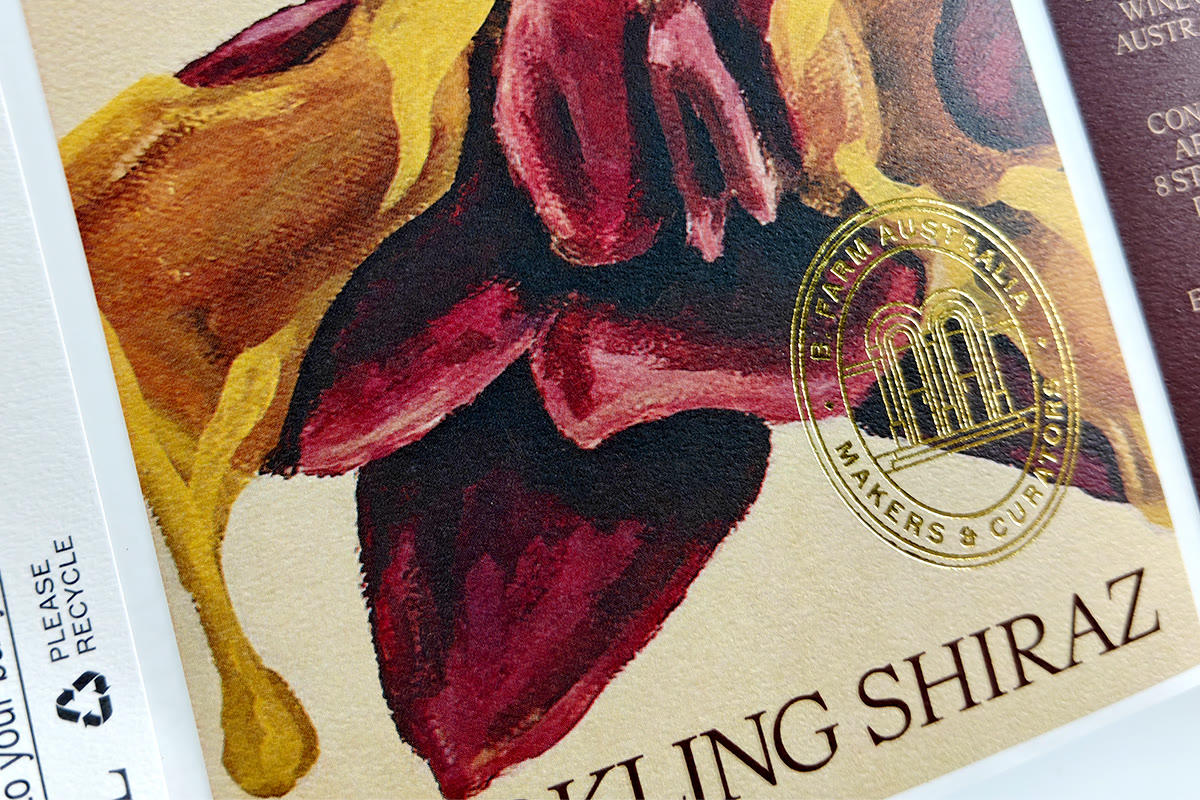
Unlike coated or offset paper with its smooth, flat surface, specialty paper is paper that has gone through special treatment to carry a surface texture — available in a range of different textures, each with its own feel and look.
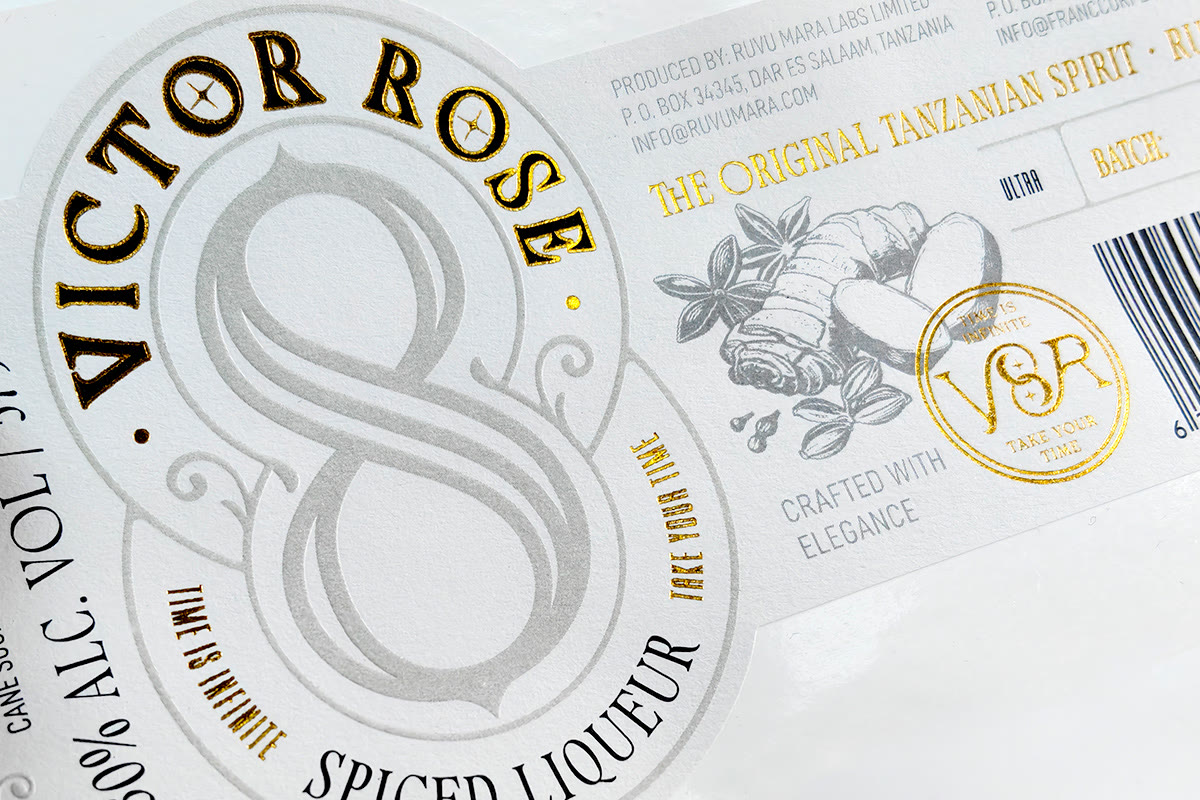
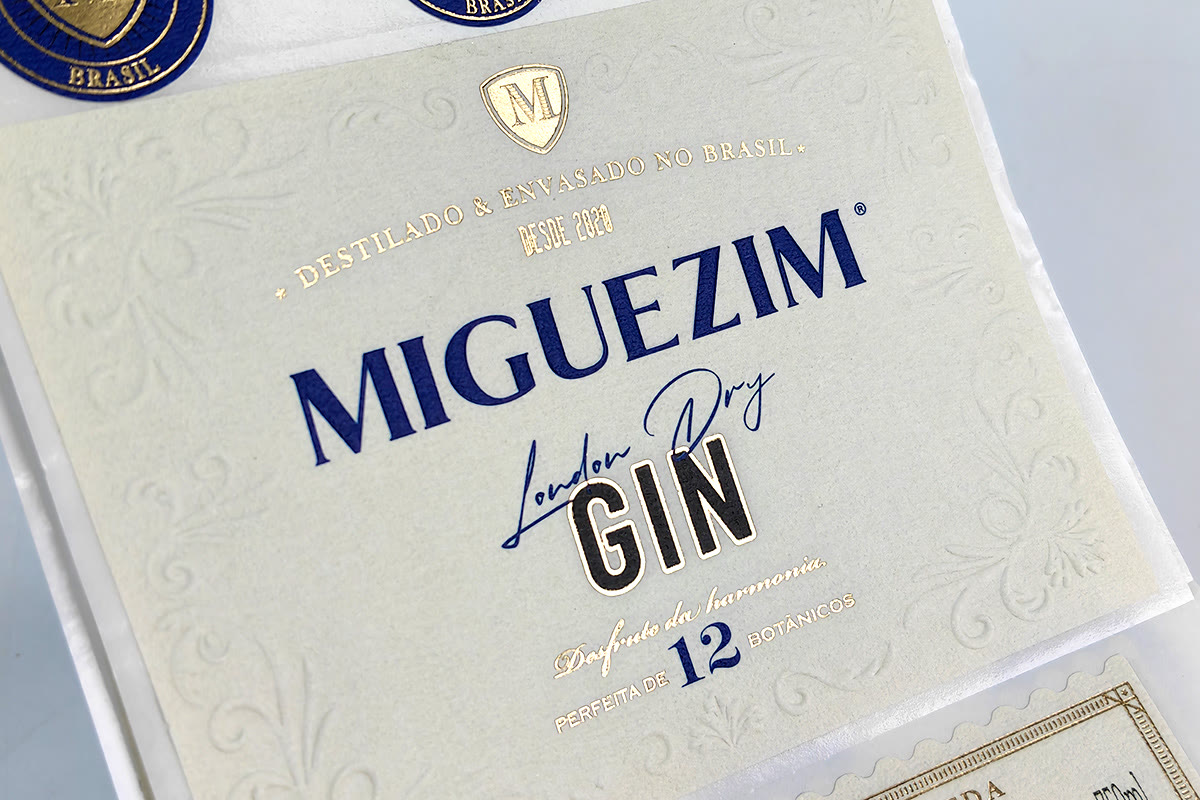
Visually it reads matte with a granular surface. Tilt it under light and the texture seems to “move” with the angle, giving it more of a hand-made, high-end character than smooth paper. That’s why so many wine, cosmetics and gift brands favor it — the same artwork on specialty paper instantly looks a tier more expensive.
On sustainability it has a natural edge: the paper itself is biodegradable; at DJB, the mainstream paper materials can be supplied with FSC (Forest Stewardship Council) certification on demand, which suits brands that emphasize sustainability or need ESG backing.
2. Why Digital Printing Barely Handles Specialty Paper
Digital printing is essentially inkjet or toner transfer — the ink or toner lands on the material surface, gets absorbed, then cured. That logic runs into trouble on specialty paper:
- Ink spread / bleeding: the textured surface is uneven and highly absorbent. Ink settles into the grooves unevenly, edges feather and blur, and small text, fine lines and gradients turn muddy — the print comes out dirty.
- Equipment risk: the irregular paper fibers, dust and uneven surface can wear the print heads, raise the jam rate, and in bad cases damage the machine as it passes through the precision feed and fusing mechanism.
The takeaway: not “absolutely impossible”, but “high risk, poor result, not worth it”. Real specialty-paper orders rarely go through digital.
3. So What Do You Print With? PS Offset / Full Rotary / Semi-Rotary
These are all conventional (analog) printing — they press the ink onto the paper with a plate, tolerating surface unevenness, holding the texture down and pressing color into the stock.
- PS Offset
- Full Rotary
- Semi-Rotary
- PS Offset: best for medium-to-large runs, mostly flat color; fine screening, stable color.
- Full Rotary: continuous high-speed web, for large runs with tight registration demands.
- Semi-Rotary: web-fed but intermittent; for small-to-medium runs and frequent job changes, more cost-friendly.
In short: small volume → semi-rotary; large volume → full rotary or offset.
4. Surface Finishing: Why No Lamination, Only Varnish
Many people’s first instinct is to laminate the label for protection, but specialty paper precisely cannot be laminated:
- Lamination presses a film onto the paper. The textured, rough surface won’t let the film seat properly and the adhesive can’t fully bond — result: bubbling, edge lifting, even whole-sheet delamination. So specialty paper is never laminated.
- The correct protection is varnish:
- Full-matte varnish: matte, diffuse reflection; pairs best with the paper’s matte character, and gives light scratch, fingerprint and dirt resistance.
- Local screen-printed UV: a thick UV layer on the logo or main artwork, with height and a glossy face that contrasts the matte base — that’s where the premium feel comes from.
Common misconception: many assume specialty paper can take a “full gloss varnish” for a mirror shine like ordinary paper. It can’t — the stock is highly absorbent and ink bleeds through, so a full gloss varnish won’t read as mirror; it turns grey and dull. The right way is full-matte varnish + local screen UV, not full gloss. At the end of the day, clients choose specialty paper for that matte, textured, high-end feel; a full gloss varnish eats the matte character and kills the premium vibe — matte is where the value lives.
Keep in mind: varnish only gives “some” protection (scratch, fingerprint) — far less than lamination for water and oil resistance.
5. Specialty Paper × Foil: The Premium Combo
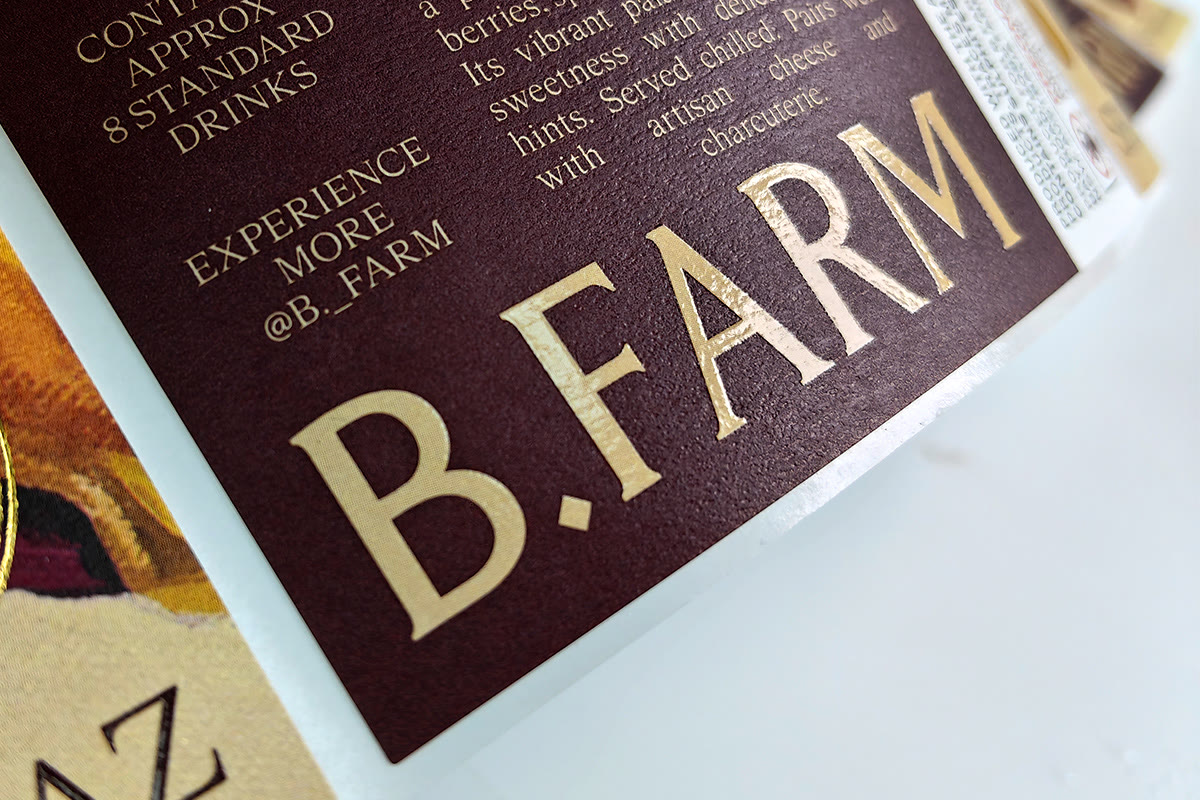
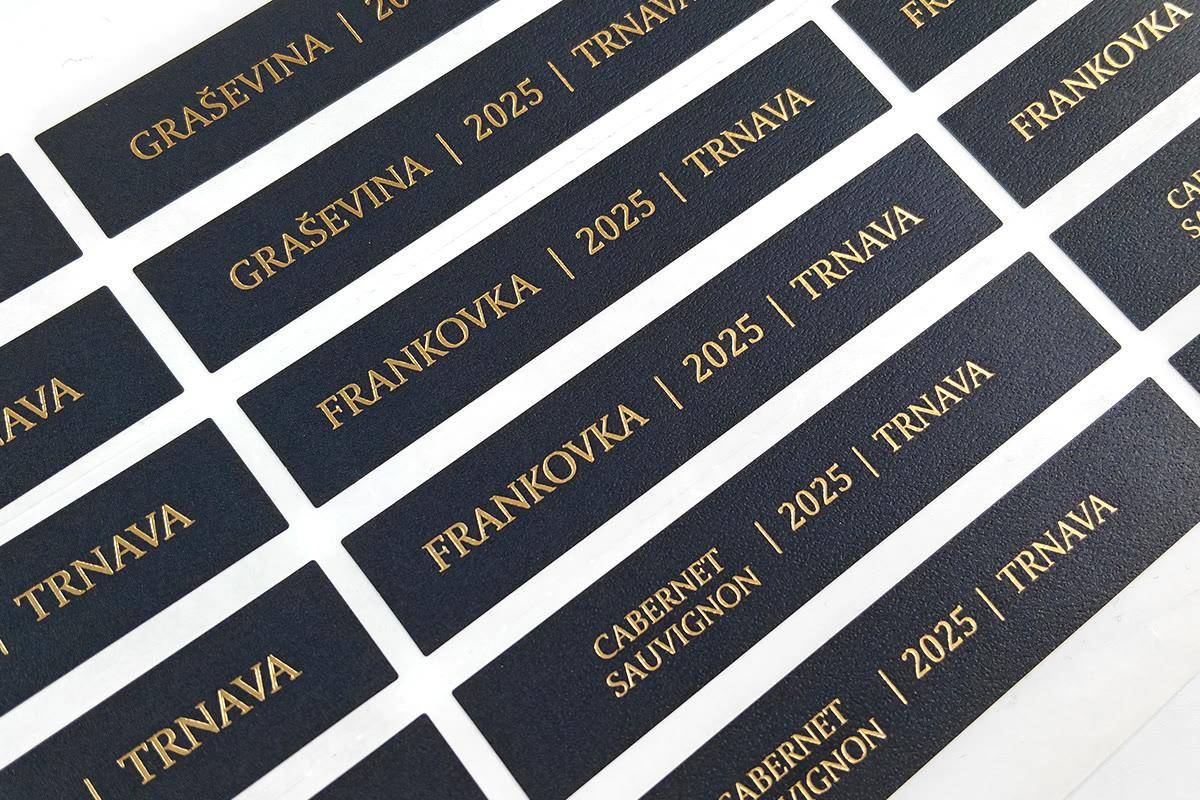
If specialty paper is the “matte base”, foil is the “shiny accent” — one of the most common pairings in high-end labels. Matte textured stock meets metallic foil: matte against shine, rustic against luxe, the contrast snaps into focus. Wine, cosmetics and gift-box labels almost all play this way.
Some worry: if specialty paper can’t be digitally printed, can it even be foiled? No conflict. Foil is an independent post-press process done after the artwork is printed — a copper or resin plate plus heat and pressure transfers the foil film onto the paper, a different stage from printing (inkjet/toner). So “no digital printing on specialty paper” and “specialty paper foils just fine” coexist perfectly.
Foil splits into a few processes:
- Hot foil: make a foil die, transfer hot-foil film with high heat + pressure. Min line width 0.2 mm; result depends on film, artwork finesse, substrate, temperature and pressure. The textured surface isn’t perfectly flat, so foil temperature and pressure must be dialed in or it comes out weak / dusty.
- Cold foil: a resin plate plus foil primer + semi-cured UV + pressure transfers cold-foil film — a different flow from hot foil. Also affected by artwork, pressure, film transfer and substrate.
- Wet foil (screen) and digital foil exist as supplementary options, chosen by artwork finesse and volume.
Pairing tip: matte specialty paper + full-matte varnish base + local foil (logo, border, main graphic) follows the same aesthetic logic as “matte varnish + local screen UV” — matte base, shiny accent. Keep foil fine lines and small text at 0.2 mm or above line width; too thin and the plate won’t etch cleanly and transfer won’t hold.
6. Paper Is Still Paper: Water & Condensation
Specialty paper is paper at heart — not water-resistant. The easiest trap is condensation:
When a label moves from a cold store, fridge or cold-chain transport (low temp) to room temperature, the bottle and label meet warm air and sweat (condensation). Once wetted, the paper label deforms, wrinkles, peels, and the print smears.
So set the boundary clearly: labels stored at room temperature — wine, cosmetics, gift — are perfectly fine; but long soaks, icing, heavy friction or greasy industrial / cold-chain scenes call for something other than ordinary specialty paper — unless you go ice-bucket paper.
7. The Exception of Exceptions: Ice Bucket Paper
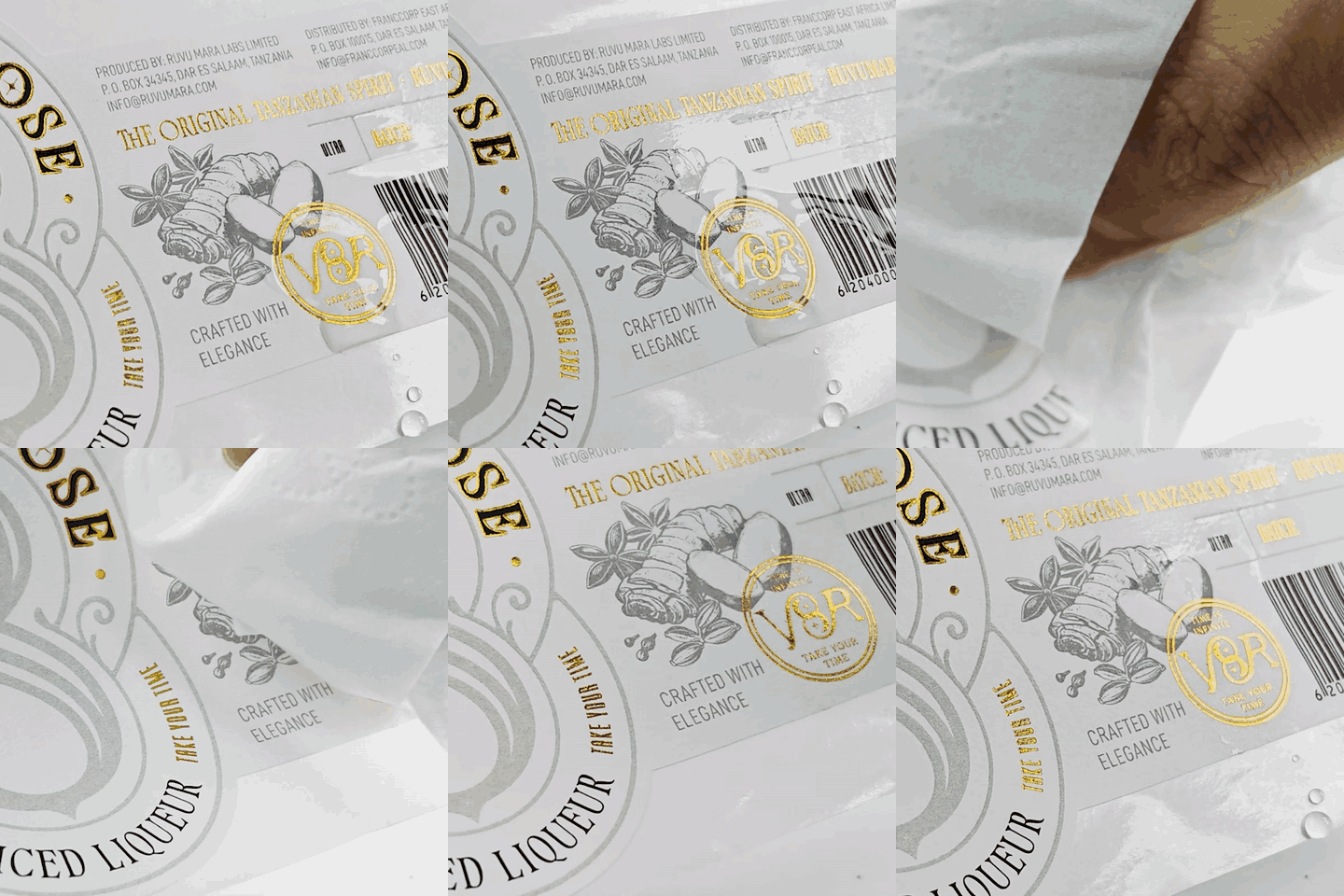
Ice bucket paper is a “maverick among specialty papers” we use often:
- It is white, textured high-end specialty paper, developed for “needs to be soaked, needs to be chilled” scenes.
- Key ability: inherently water-resistant; can sit in low temp even ice-water without the condensation ruining it.
- It does two things at once: keeps the texture and premium look of specialty paper, while patching the “fears water” fatal flaw of ordinary paper.
- On certification it can also be supplied with FSC.
The use case is clear: labels for drinks in ice buckets, craft / champagne labels needing chilled display, premium cold-drink labels — where you need both water-resistance and that “paper premium feel”, ice bucket paper is built for exactly this.
8. What Labels Does Specialty Paper Suit?
Suited for: wine / spirits labels (direct quality boost), premium cosmetics labels, gift / gift-box labels, hand-made / niche brand labels, and eco brands pushing sustainability with FSC backing.
Not suited for: long-soak, heavy-friction, greasy industrial / cold-chain labels — unless ice bucket paper.
9. Quick Selection Table
| Your Scenario | Recommended Approach |
|---|---|
| Texture premium feel + room-temp use | Specialty paper + full-matte varnish + local screen UV |
| Eco / sustainability backing | Mainstream paper materials (on demand) + FSC |
| Water-resistant / chilled display | Ice bucket paper |
| Large volume, tight registration | Full rotary / PS offset |
| Small volume, frequent changes | Semi-rotary |
| Never do | Digital-print specialty paper · Laminate specialty paper · Full gloss varnish |