
Peptide Vial Labels: Small Space, Cold Storage and the Visual Ceiling
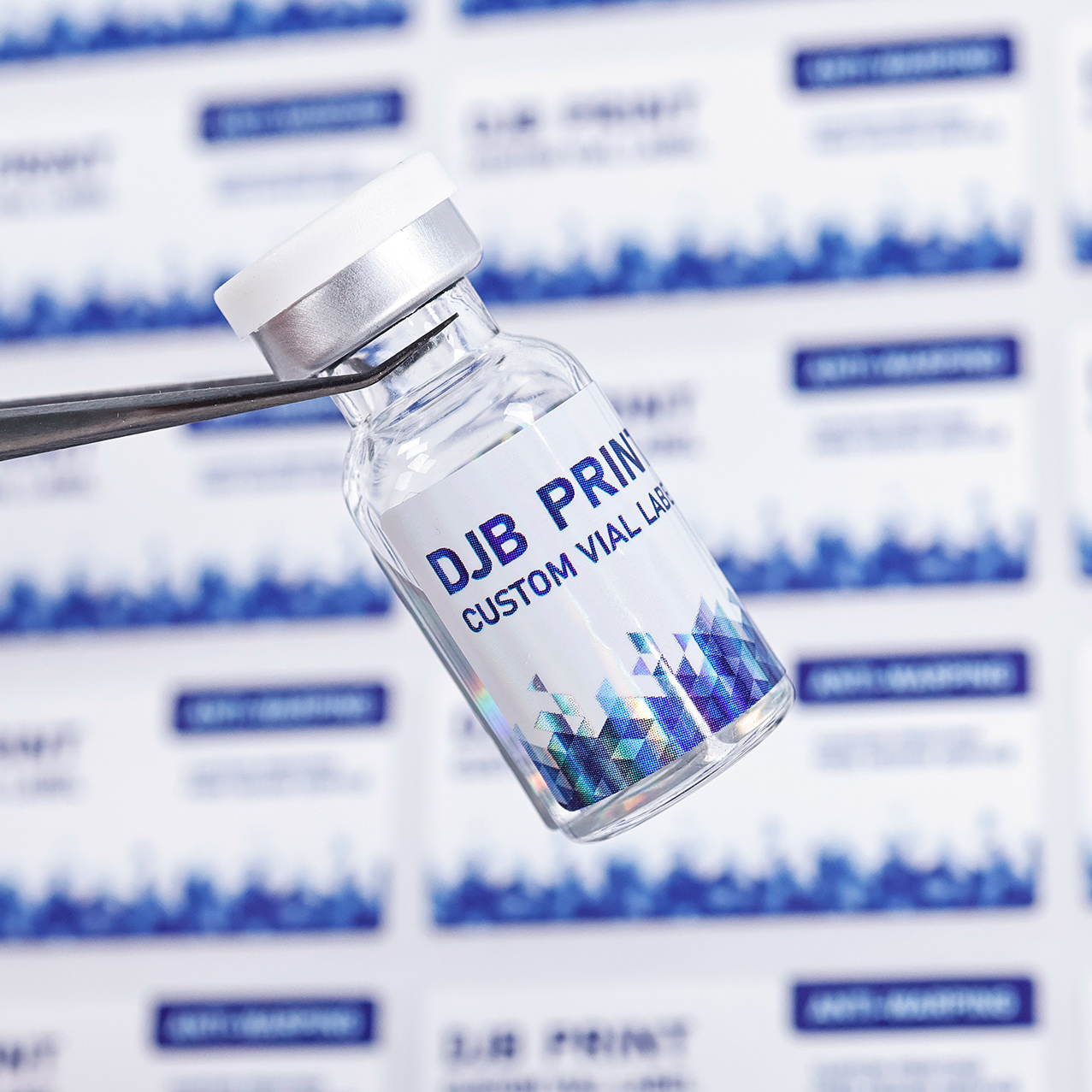
Peptide products usually arrive as lyophilized powder in tiny glass vials. The label on that vial has to survive cold storage, condensation cycles and a curved surface smaller than a credit card. Here is what we have learned from printing labels for this market — and a clear disclaimer first.
1. What We Mean by “Peptide” Here
Peptides are short chains of amino acids, often supplied as a dry powder in small research or wellness vials. They are handled under strict regulations in many countries and may be classified as controlled or sensitive substances depending on the jurisdiction.
Disclaimer: DJB Print manufactures printed labels and packaging stickers only. We do not supply peptide, biochemical or active-ingredient materials, and we do not offer advice on the regulatory status, sale, import or use of peptide products.
2. The Storage Environment Beats Up the Label
Most peptide vials are kept refrigerated or frozen. When a vial is taken out, the glass surface drops below the dew point and condensation forms almost immediately. A standard paper label soaks up that moisture, softens, and the edges start curling — especially on a small-diameter vial where there is almost no flat surface to grip.
We see three recurring failure modes:
- Edge lifting and flagging. The label corners peel up because the adhesive loses tack at low temperature or because the label is too stiff for the curved glass.
- Wrinkling. Condensation softens the face stock, and the label wrinkles when the vial is handled or capped.
- Print rubbing off. Gloved hands, ice baths and repeated wiping abrade unprotected ink on paper or low-quality film.
3. Small Label, Limited Real Estate
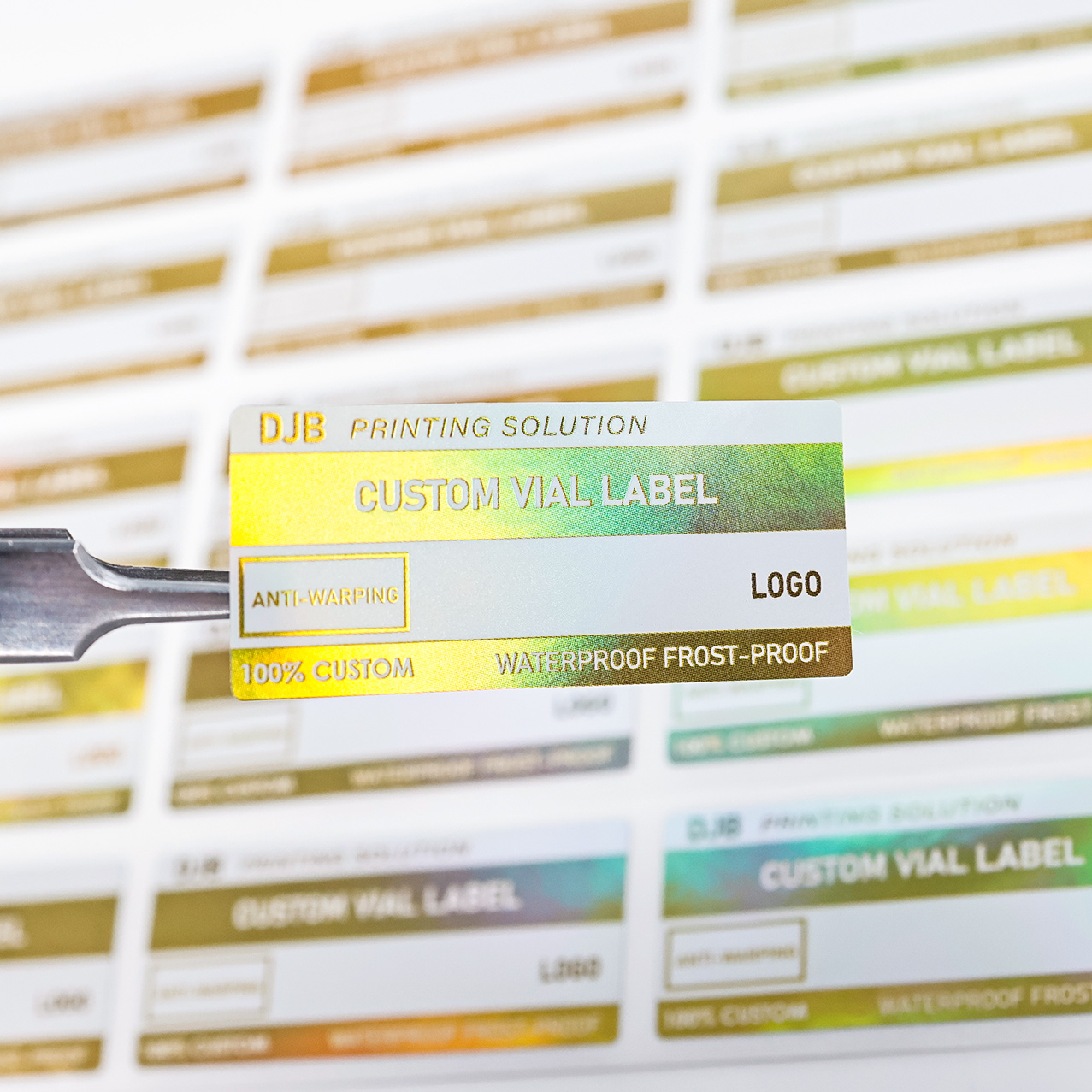
A typical peptide vial label is only a few centimetres long. On that strip the brand has to fit: logo, product name, concentration, batch number, storage instruction and often a QR code or barcode. There is no room for decorative clutter.
This is why the choice of process determines the visual ceiling. You cannot stack embossing, foil, UV and full-colour illustration on a 2 cm label and expect it to read cleanly. On a tiny label, one strong finish usually beats three weak ones.
4. Material and Process Combinations That Work
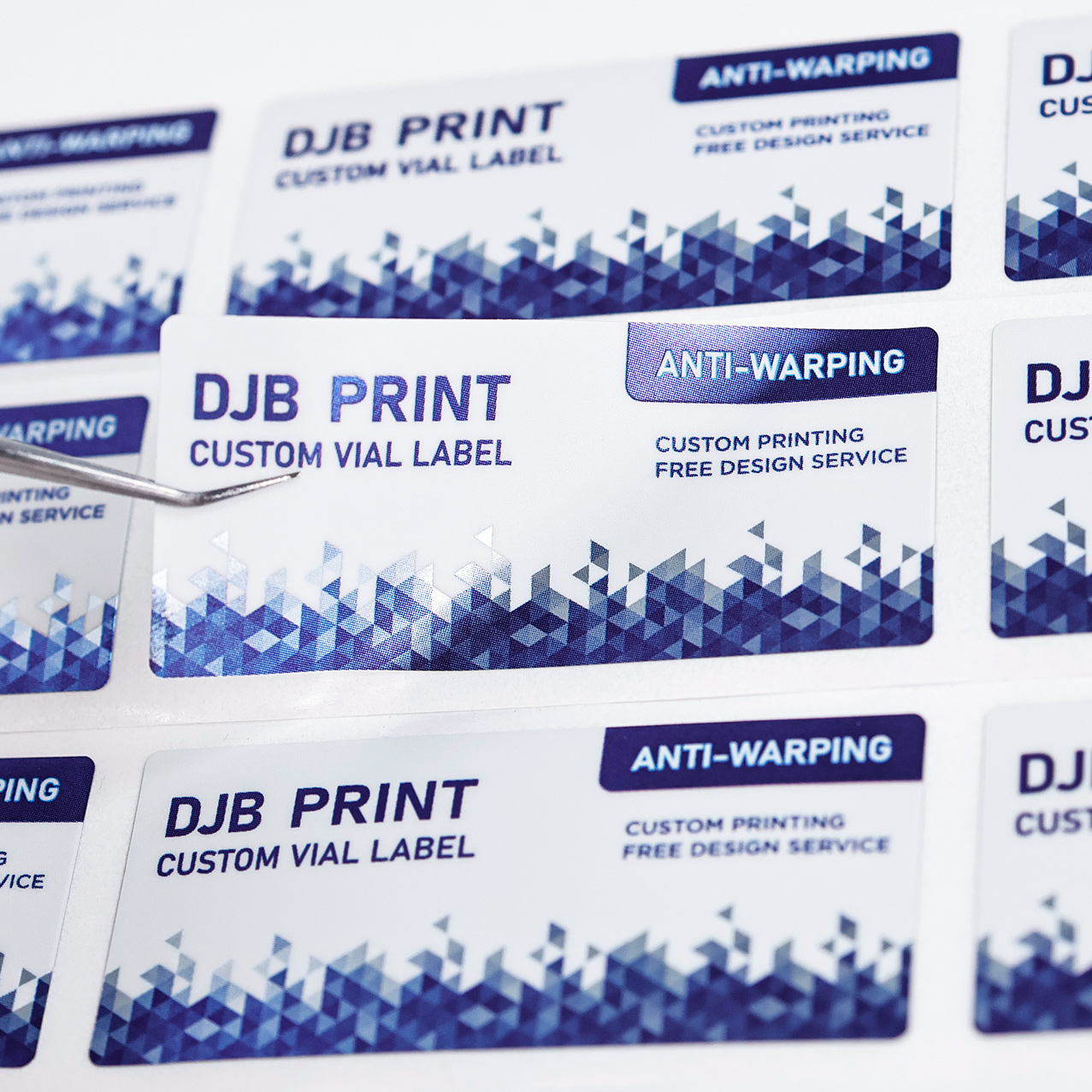
These are the combinations we run most often for cold-chain vials:
- Silver BOPP / PET film + gloss lamination. The standard workhorse. Waterproof, wipeable, and the lamination protects the print from abrasion.
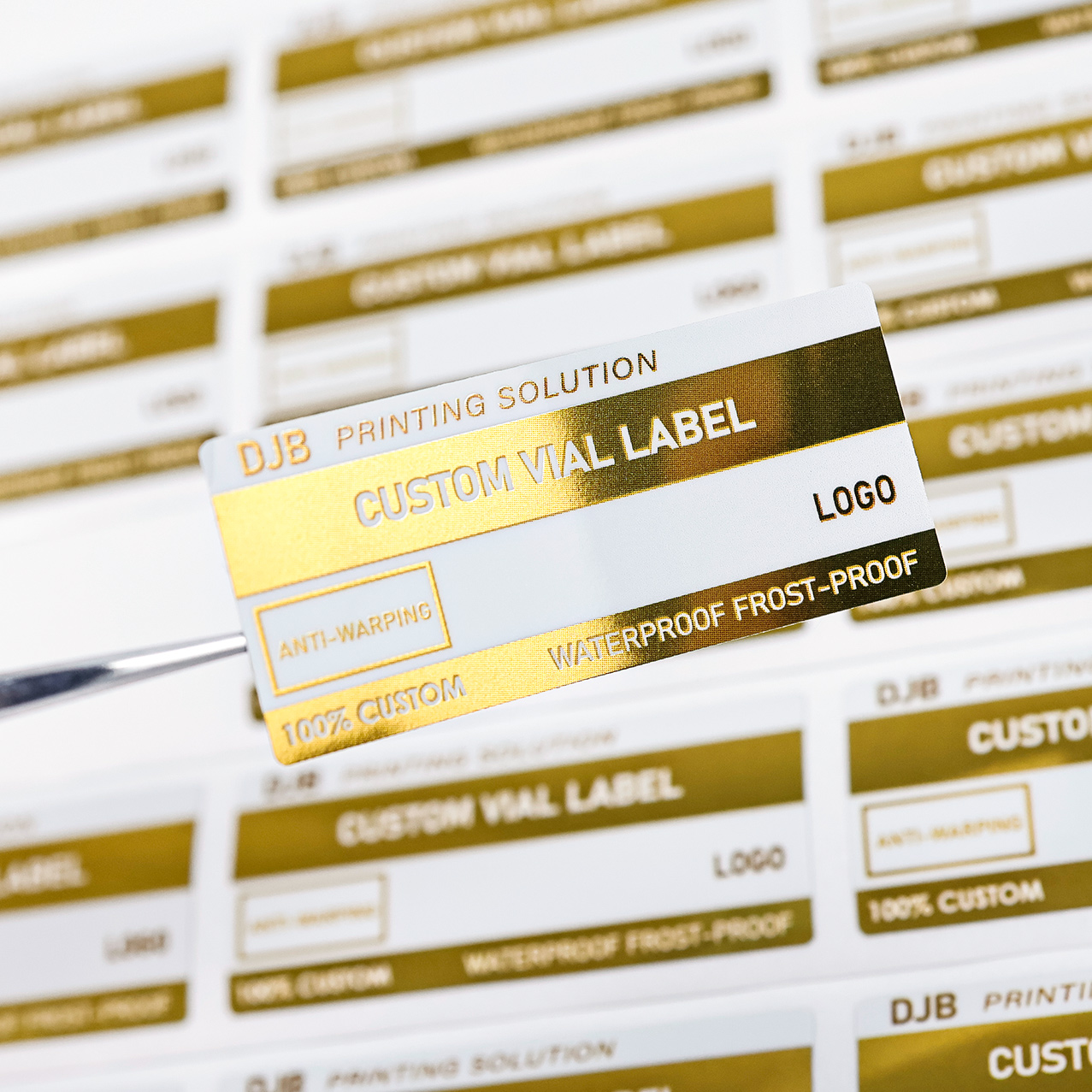
- Holographic film. Adds visual interest and a colour-shift effect in one substrate. Good when the design needs to look premium but cannot afford extra finishing passes.
- Hot foil stamping. Best for a small logo or brand name that needs to pop. On a tiny label, keep the foil element thin and precise — broad foil areas can look heavy.
- Spot UV. Adds a gloss highlight to a matte background. One element is enough; more competes with the text.
We do not emboss film labels for peptide vials. BOPP and PET rebound after embossing, so the relief will not hold.
5. The Adhesive Is Half the Solution
A beautiful label is useless if it lifts in the fridge. For peptide vials we spec an anti-warping, cold-grade adhesive matched to the film and vial diameter. The goal is to keep the label flat through:
- temperature swings from freezer to room;
- repeated condensation and wipe-down;
- handling with nitrile gloves.
We test the bond on the actual vial size and material before committing to bulk, because a label that works on a 10 ml vial may fail on a 2 ml vial.
Specs at a Glance
| Item | Detail |
|---|---|
| Typical vial size | 2–10 ml glass vials |
| Common storage | Refrigerated or frozen; condensation risk |
| Face stock | Silver BOPP / PET or holographic film |
| Adhesive | Anti-warping, cold-resistant, permanent |
| Finishes | Hot foil, spot UV, gloss / matte lamination |
| What we do not do | Supply peptides, active ingredients or regulatory advice |
Common Questions
Can you print barcodes and QR codes that scan reliably on such a small label?
Yes, as long as the code is vector and sized within the readable range for your scanner. We recommend a minimum quiet zone and test scan before bulk production.
Why does my current paper label wrinkle after refrigeration?
Paper absorbs moisture from condensation and softens. Film (BOPP/PET) does not absorb water, and lamination adds a barrier layer that keeps the print dry.
Is holographic film more durable than silver BOPP?
Both are durable when laminated. Holographic film adds a decorative optical effect; the durability comes from the lamination and adhesive, not the pattern.
Do you supply labels on rolls for automatic vial labelers?
Yes. We wind rolls to your applicator pitch, core size and unwind direction.