Anti-Counterfeit Labels: What Actually Stops Fakes on the Shelf
A label is the cheapest line of defense a brand has against counterfeiting — but most “security labels” get copied anyway, because they’re printed exactly like a normal label. Here’s how we build ones that hold up once they leave the factory.
Why most anti-fake labels get cloned anyway
A plain QR code printed on a standard glossy label takes a counterfeiter about five minutes to copy. They photograph it, reprint it, and the fake scans to the same page as the real one. The visual layer doesn’t defend anything; the data layer defends the wrong thing.
The brands that actually slow fakes down do the opposite: they stack a visual feature that’s expensive to reproduce on top of a data feature that verifies. Neither alone is enough. Together, they raise the cost of faking past the point where it’s worth it.
— DJB production lead, Dongguan
What we actually run at DJB
These are the three layers we combine, all producible in our Dongguan facility. We don’t claim every method under the sun — we combine the ones that print clean and survive in the field.
One-code-per-item variable data
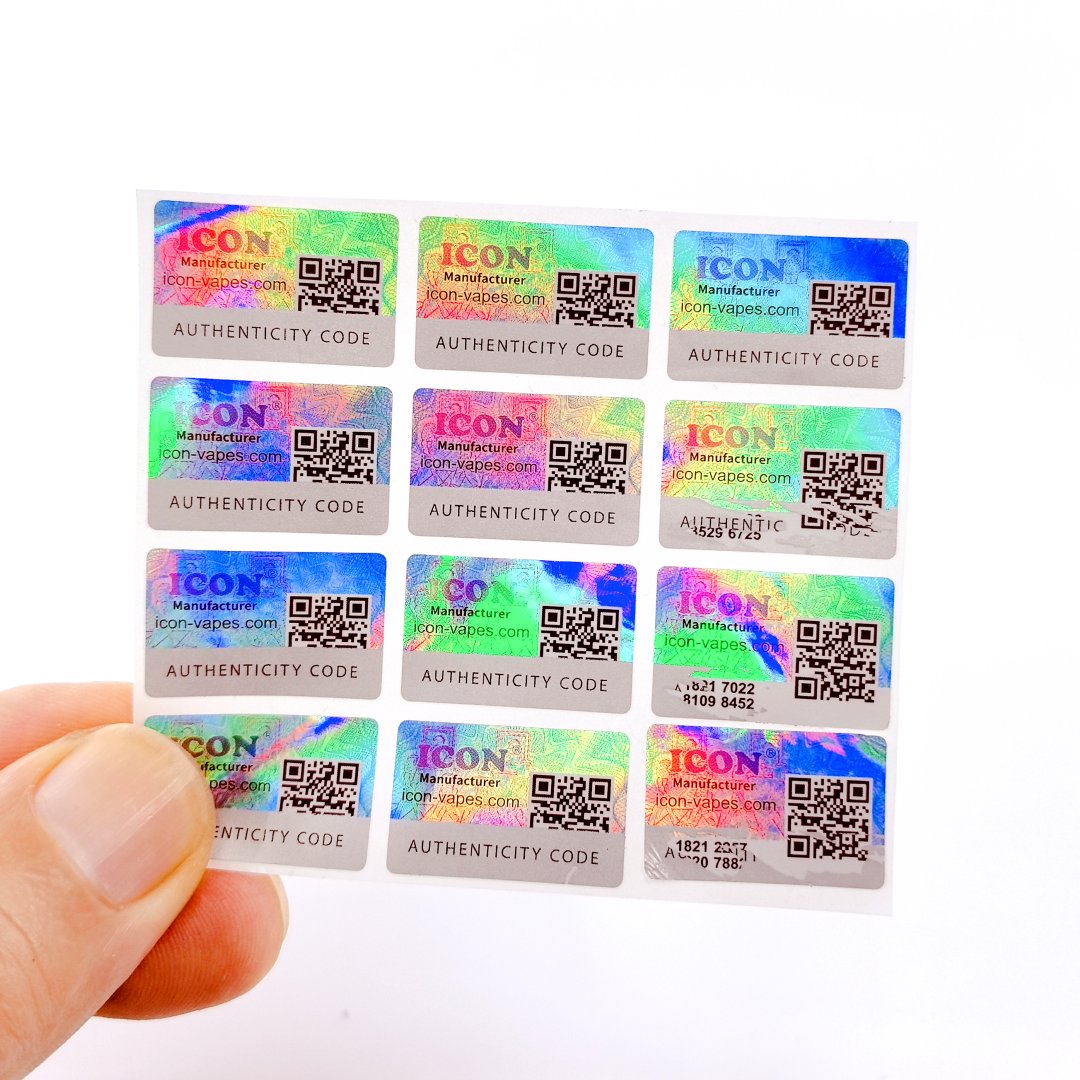
Unique QR / serial / barcode on every label. You send an Excel or CSV, we match each code to your artwork template and print it inline — no two labels identical.
Holographic & laser foil
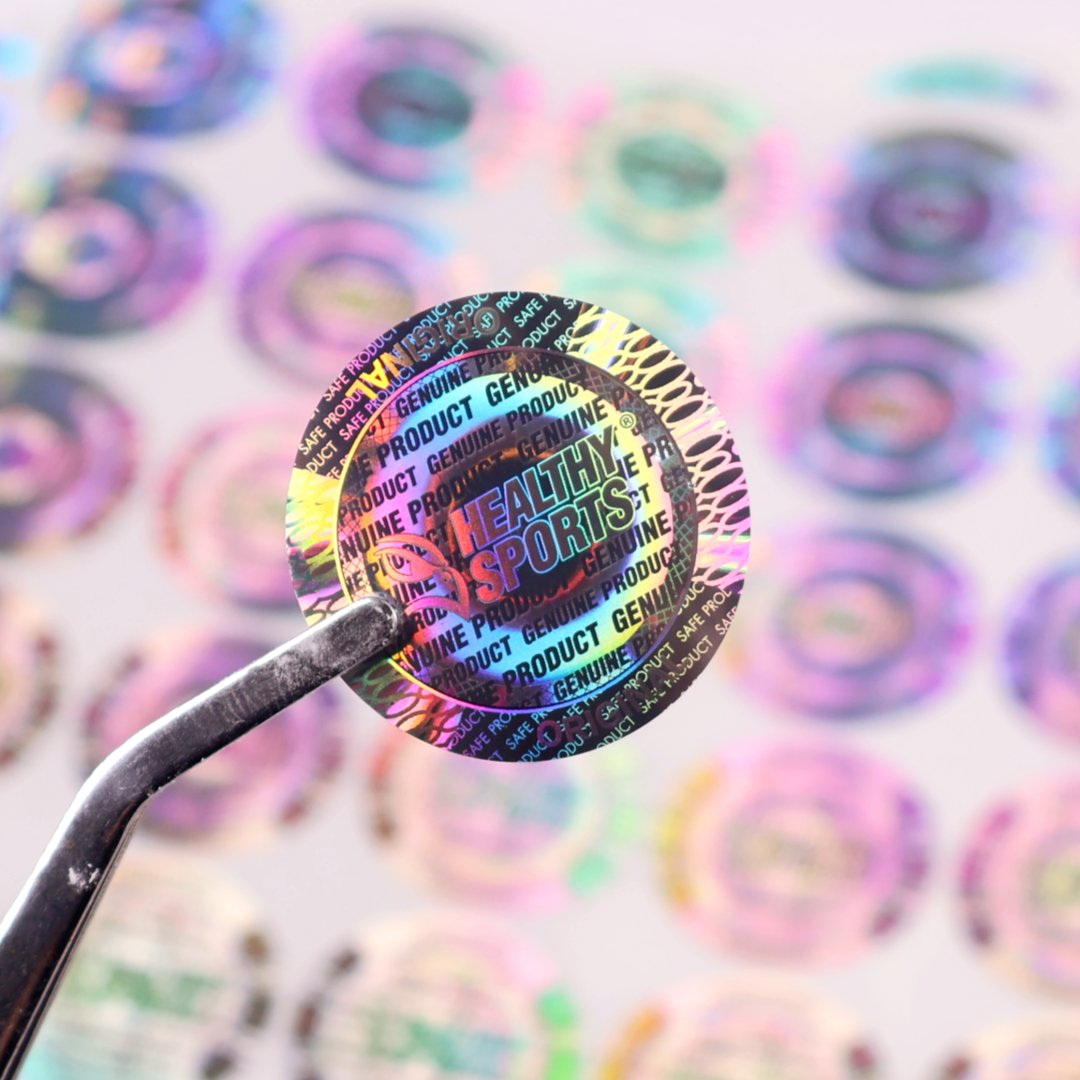
Done by hot stamping or cold foil. The rainbow shift and fine line work cost real money to fake, and it reads as “genuine” to a buyer at a glance.
Foil + embossing combo
Metallic foil with a raised, tactile relief. A flat copier can’t reproduce the feel, and that texture is half the authentication.
Picking the face stock (it changes the security)
The base material decides how long the anti-fake feature lasts. A holographic layer on the wrong stock peels or scratches off in transit and the protection goes with it.
| Use case | Stock we spec | Why |
|---|---|---|
| Harsh / outdoor / electronics | Bright silver PET | Hard, tear-resistant, holds −40 °C to 150 °C, shrugs off solvent and UV. Foil sits on it cleanly. |
| Liquor, gift, premium | Coated / specialty paper | Holographic and foil show best on paper; the embossed relief reads as high-end, not sticker. |
| Food, pharma, daily chemical | PP synthetic paper | Water- and oil-resistant, tear-resistant, doesn’t curl. Survives cold chain and humid shelves. |
Tamper-evident: when removal has to leave proof
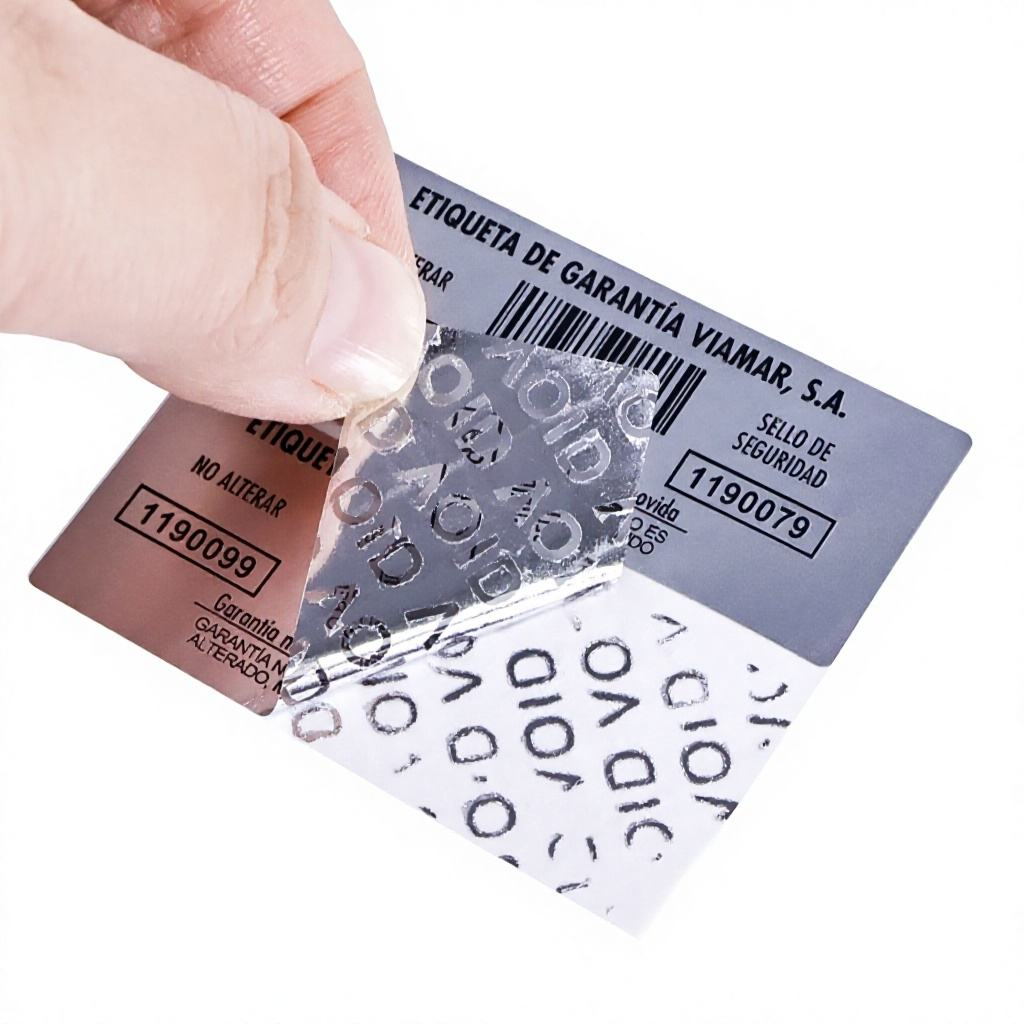
Some fakes aren’t reprints — they’re real bottles and boxes that get opened, refilled, and sealed back up. For that scenario the label has to do something when it’s peeled off. We use a VOID-release adhesive construction: once the label is stuck down and then lifted, the glue splits. A layer stays on the product surface as a permanent “VOID” pattern, and the lifted label is deformed — it can’t be stuck back down cleanly.
This is different from a normal strong adhesive. A strong glue just holds tight; a tamper-evident glue is engineered to fail in a visible way. The retained text or pattern can be your brand name, “OPENED,” or a custom warning. It’s common on warranty seals, carton closures, and high-value cosmetics or spirits.
The adhesive matters more than people think
A security label that falls off is worse than no label — it tells the buyer the product was tampered with, or just looks cheap. Glue choice follows where the product actually lives:
- Oil-based adhesive — for frozen / cold-chain and outdoor-durable labels. Sticks at −20 °C and resists water and oil. This is the one we reach for on freezer food and long-haul logistics.
- Water-based adhesive — for ambient food, pharma, daily chemical where eco requirements are strict. Low odor, almost no bleed, but it needs ~24h to hit full tack.
- Hot-melt adhesive — for low-temp storage and temporary applications. Grabs fast even in the cold, but doesn’t like heat.
How an order runs
- Brief in: your artwork plus the Excel/CSV of codes (or we generate a clean serial sequence if you don’t have one).
- Proof on the real stock: we proof on the exact material the run uses — not a stand-in — so the foil and embossing read the way they will on the shelf.
- Print: foil (hot or cold), embossing, and variable data go down in one pass where the construction allows, which keeps registration tight.
- QC: inspection reads the variable codes and checks for duplicates or misprints before anything is packed.
Quick answers
Can any app scan the codes?
Yes — they’re standard QR. What they point to is your verification system or a third-party service you choose. We don’t lock you into ours.
What’s the minimum order?
Variable-data jobs need a clean file more than a big quantity. Send the spec and we’ll quote; small batches are fine if the artwork and code list are ready.
Do you do tamper-evident that leaves “VOID”?
Yes — we use a VOID-release adhesive construction that leaves the pattern on the product surface once the label is peeled. The lifted label is deformed and can’t be reused. Bottle caps, carton seals, and warranty stickers are the usual applications; send the surface material and we’ll spec the adhesive layer to match.
Building an anti-counterfeit label?
Send the artwork and where the product actually lives. We’ll spec the stock, foil, and adhesive so the security survives the shelf.
Pingback: Fragile Tamper-Evident Labels | Anti-Counterfeit Trifecta | DJB Print