Holographic labels catch the eye instantly. That shifting, rainbow-like surface does more than decorate a package — it signals premium quality, helps a product stand out on crowded shelves, and can even act as a basic anti-counterfeit feature. In this guide, we look at how holographic foil labels are made, what makes them shimmer, and how to combine them with hot foil, spot UV, and double-layer constructions for labels that look and perform better.
What “Holographic” Actually Means on a Label
In label printing, holographic usually refers to a diffraction film laminated onto the label face stock. The film is embossed with a micro-pattern that splits white light into its color spectrum, so the surface appears to change color when you move it or change the viewing angle. This is different from metallic silver ink or simple silver paper — those reflect light evenly and never produce the same rainbow shift.
Most holographic labels we produce use:
- Face stock: 50–80 micron PET holographic film (silver, transparent, or patterned)
- Adhesive: Permanent acrylic for glass, PET, or HDPE containers
- Liner: Glassine or PET release liner for automatic dispensing
- Top coat: Clear varnish or lamination to protect the embossed surface
The holographic effect survives flexo, UV offset, and digital printing because the image is printed on top of the film, not into it. That makes it one of the most reliable “premium” finishes for health, beauty, beverage, and gift labels.
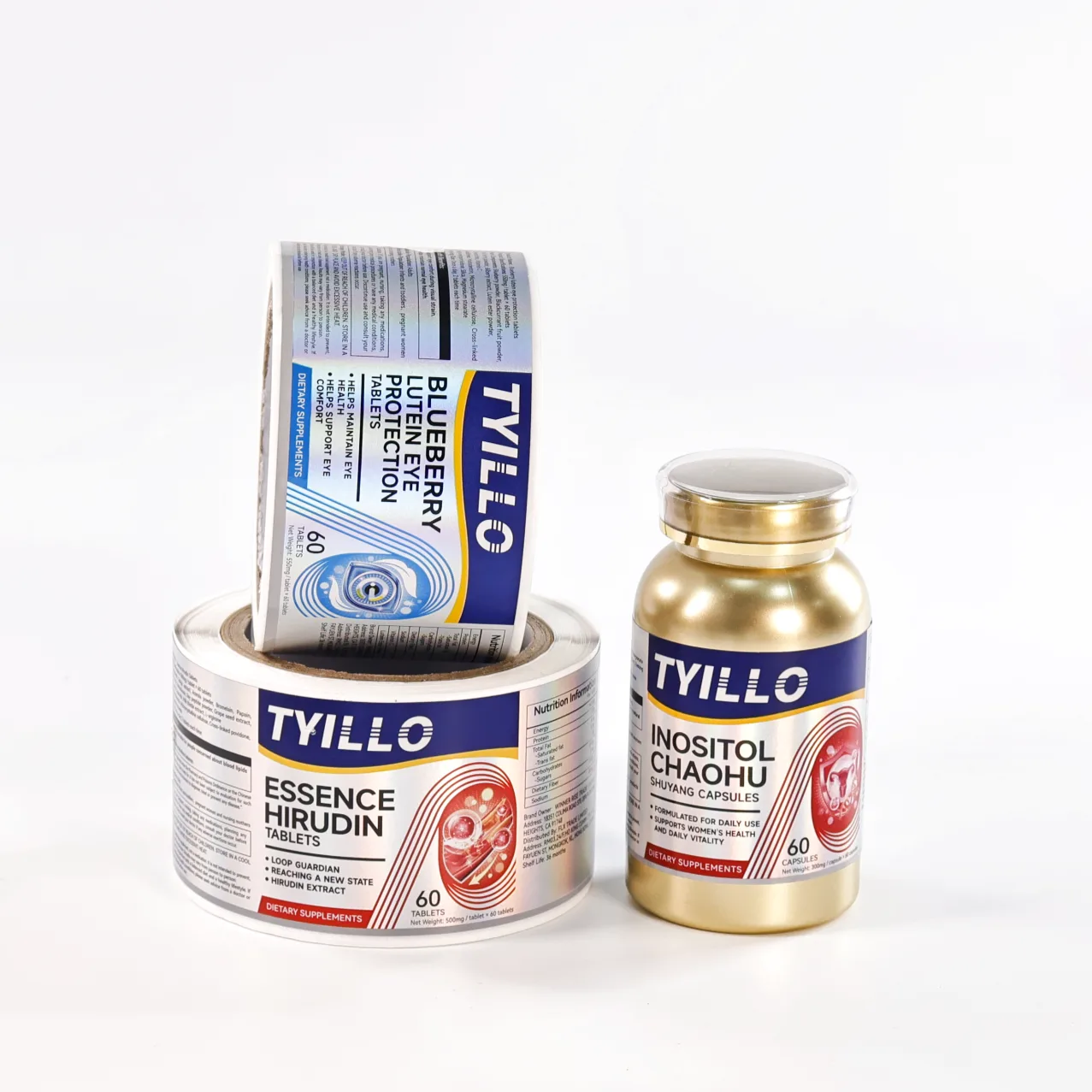
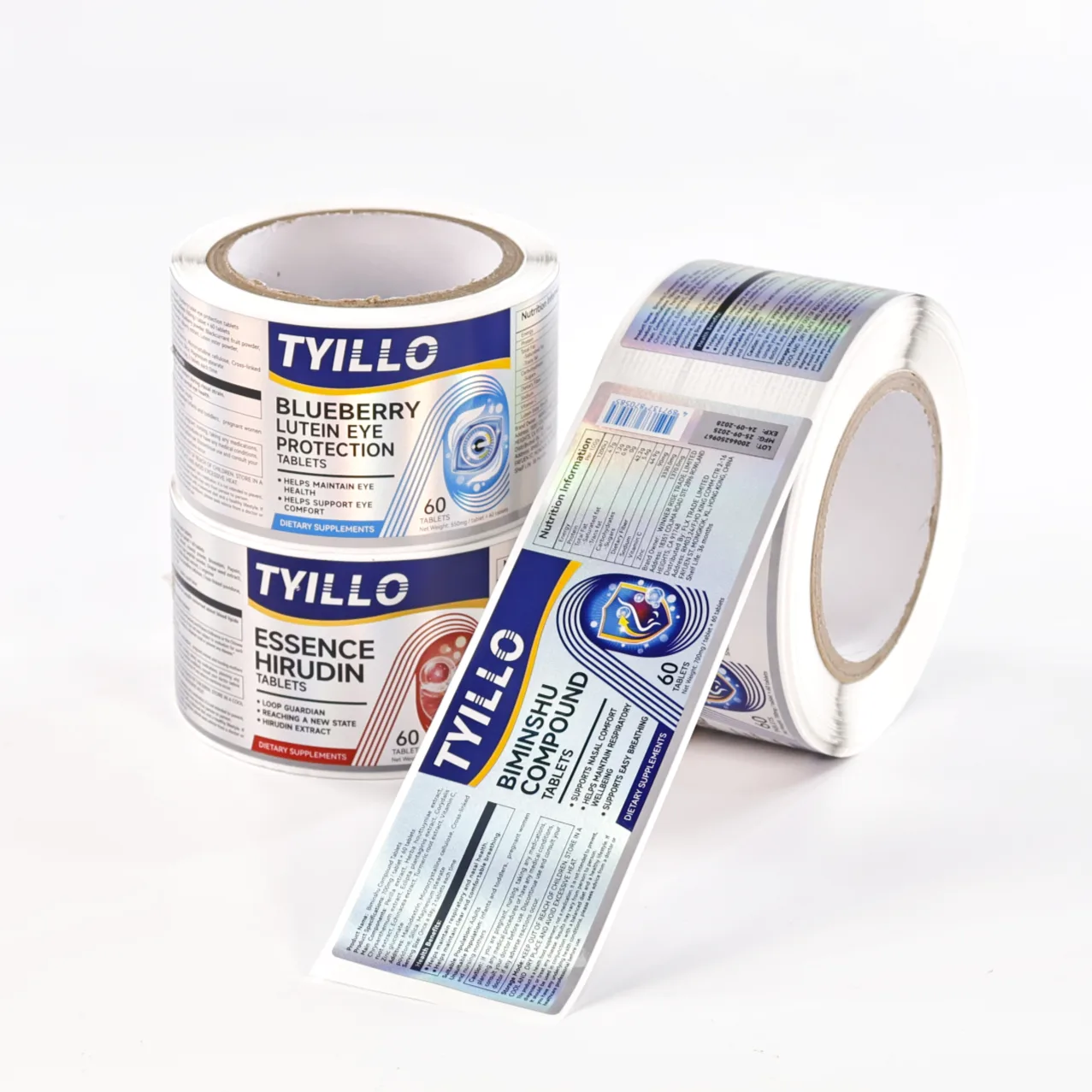
Real Product Gallery: Holographic Supplement Labels
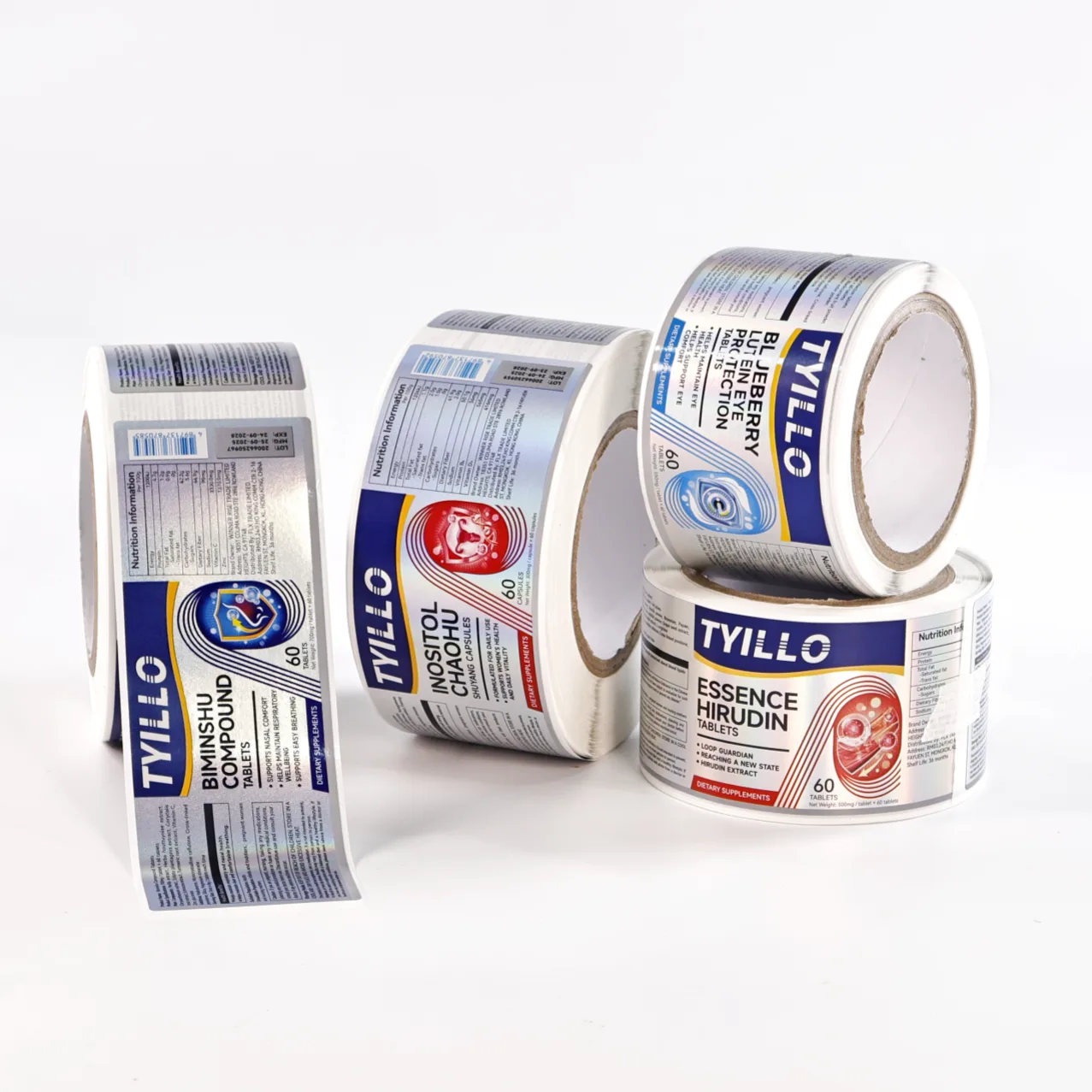
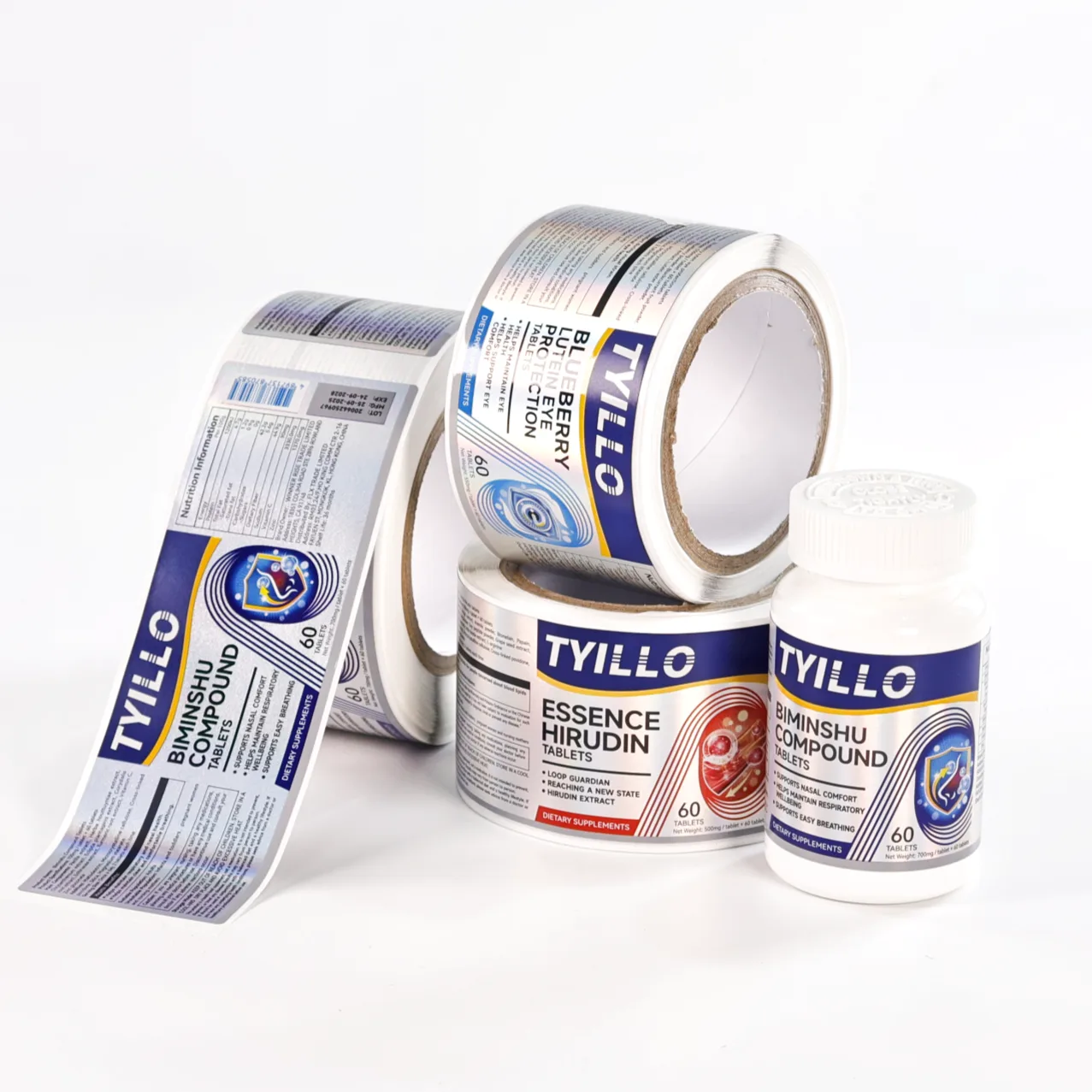
Below are four shots of the same holographic label set from slightly different angles. Notice how the silver base flashes blue, gold, and green depending on how the light hits the roll. This is exactly the behavior customers want when they ask for a “laser” or “rainbow” label.
How Holographic Labels Are Produced
- Material selection. Choose plain silver holographic film, broken-glass pattern, rainbow dots, or custom-mastered holographic patterns for larger runs.
- Surface treatment. Apply a top coating so the UV or solvent inks will adhere properly and resist scratching.
- Printing. Print brand colors, text, barcodes, and regulatory information. Artwork is normally designed with white or light ink behind text to keep it readable.
- Finishing. Add optional hot foil, spot UV, embossing, or double-layer construction (see next section).
- Die cutting & rewinding. Cut to shape, remove waste matrix, and rewind onto cores sized for the customer’s applicator.
- QC & packaging. Check registration, color, and adhesive; pack in moisture-protected cartons.
3 Ways to Pair Holographic with Other Finishes
Holographic film is rarely used alone on high-end labels. The best results come from combining it with one or two other processes. Here are the three combinations we recommend most often.
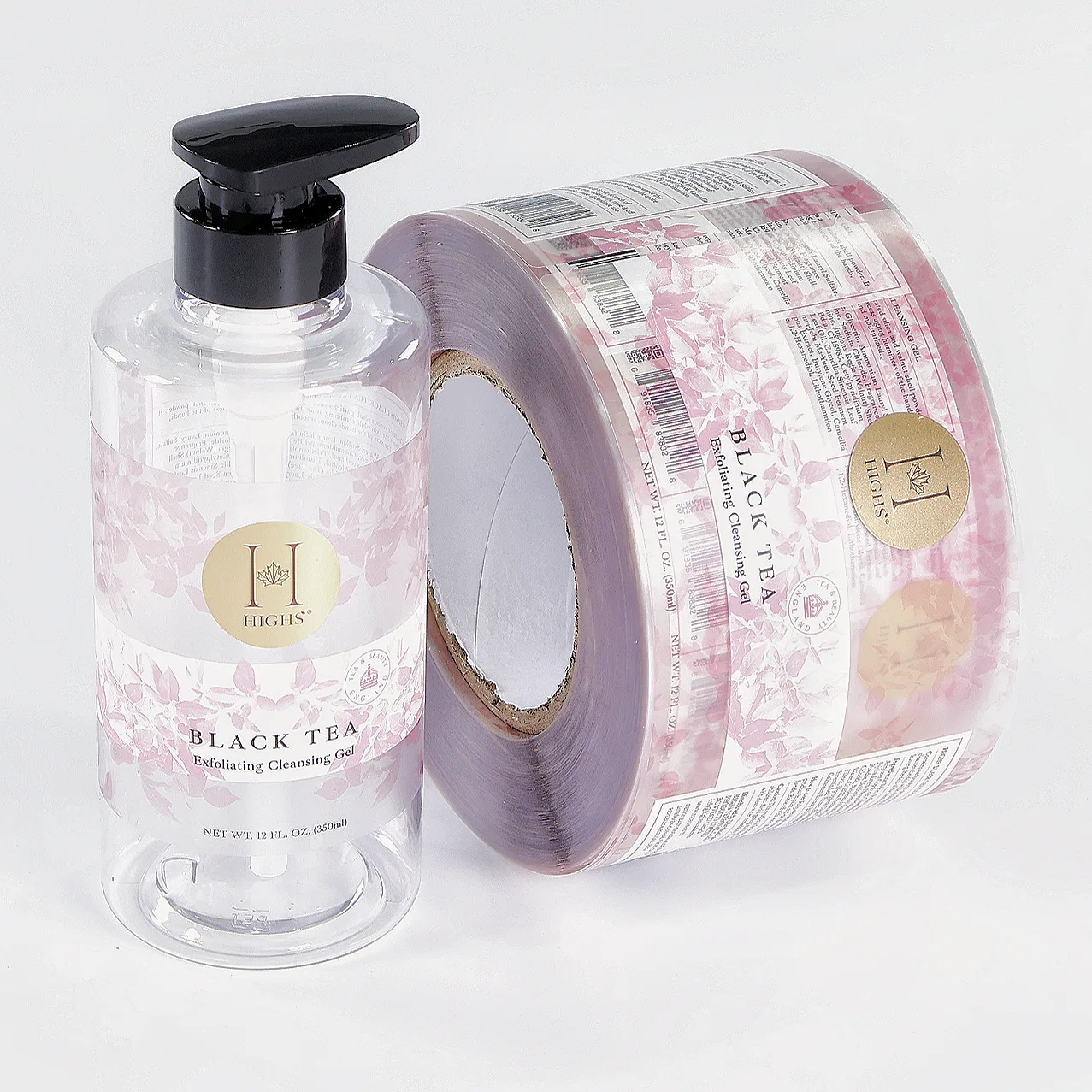
+ Hot Foil Stamping
Use holographic silver as the background, then add a gold or rose-gold foil logo or border on top. The contrast between the shifting rainbow base and the solid metallic foil creates a luxurious, layered look ideal for beauty and premium health products.
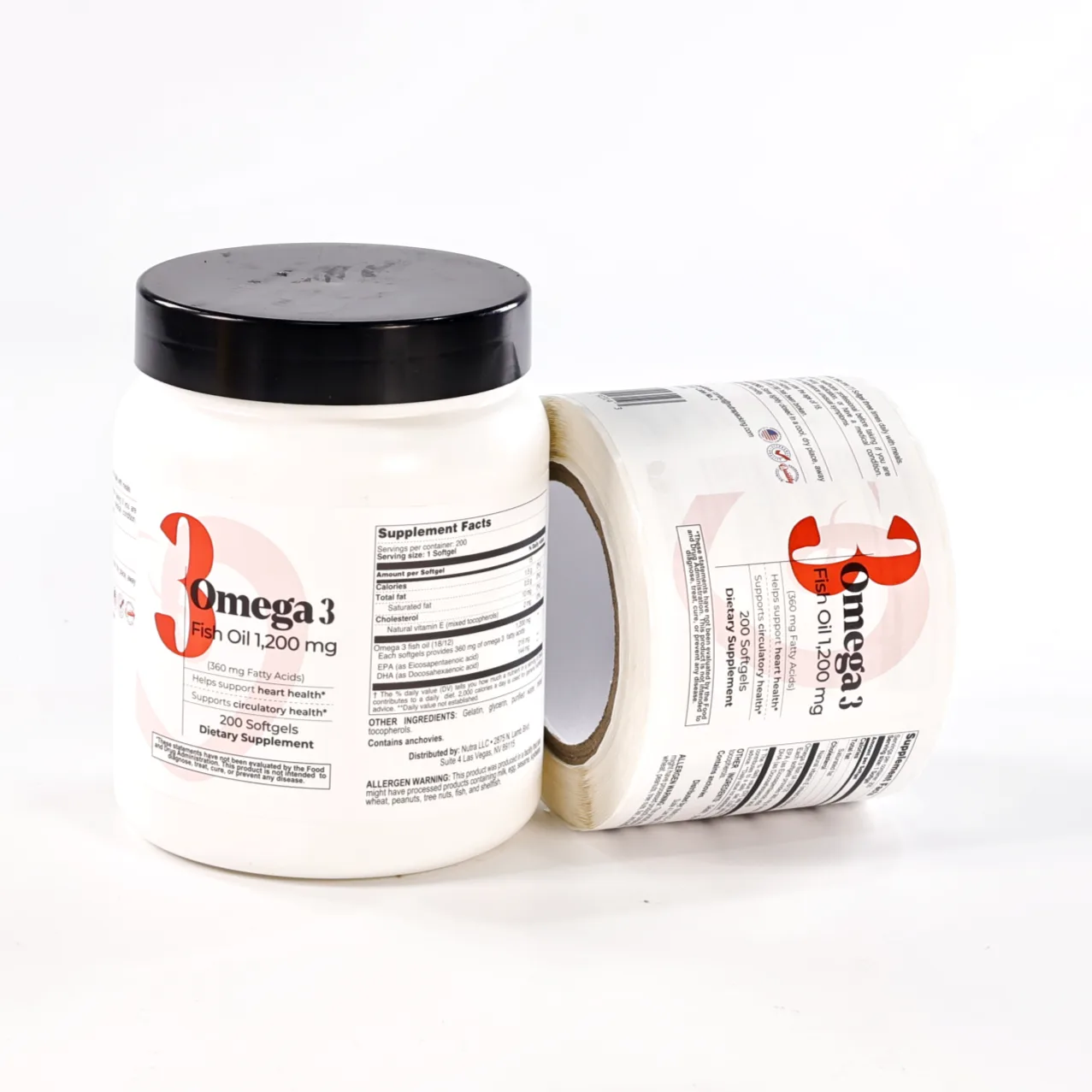
+ Spot UV / Silk-Screen
Apply spot UV or silk-screen gloss over icons, brand names, or panels. The gloss catches light differently than the holographic film, so the design gets two levels of shine: one color-shifting, one high-gloss raised.
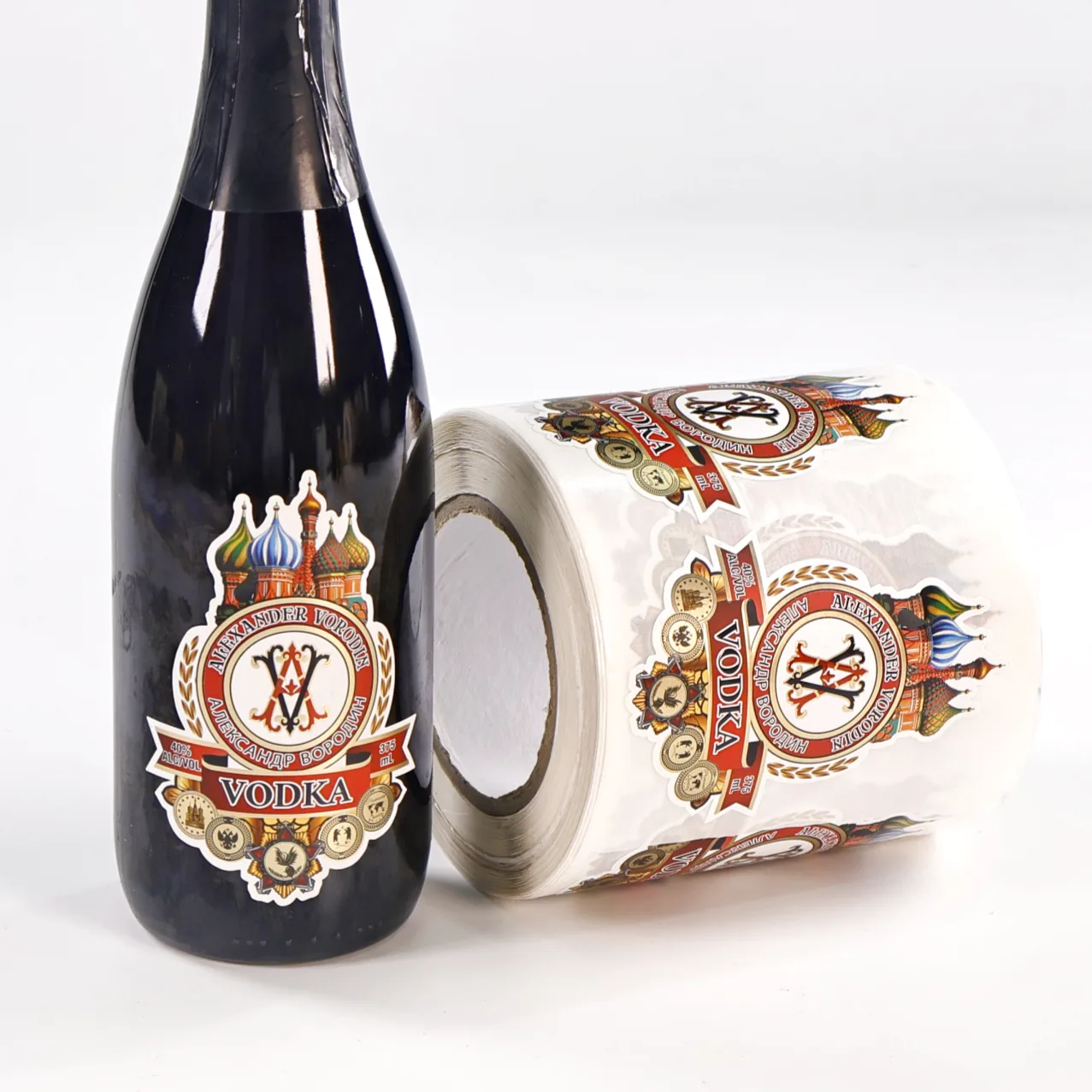
+ Double-Layer / Die-Cut
For bottles that need extra information or tamper evidence, pair a holographic front label with a shaped, peel-and-reveal second layer. The exposed holographic area draws attention; the hidden layer carries ingredients, instructions, or promotions.
Design Tips That Make Holographic Labels Look Better
- Leave breathing room. Holographic film is busy by nature. Keep at least 30–40% of the label as clean solid color or white so the text stays legible.
- Use bold, simple type. Thin fonts can get lost in the shimmer. Go for medium to bold weights, especially for small text like supplement facts.
- Match the container. Silver holographic labels look crisp on dark bottles and clean on white or clear containers. Avoid pairing with other heavy metallic finishes unless you want a very loud look.
- Plan for barcodes. Print barcodes on a flat, non-holographic white patch so scanners read reliably.
- Test the angle. The most attractive color shifts happen at specific viewing angles. If possible, photograph the product at the angle your customers will see on the shelf.
When to Choose Holographic — and When Not To
Holographic labels work best when the goal is shelf impact, premium positioning, or basic anti-counterfeit protection. They are a strong choice for supplements, cosmetics, beverages, limited editions, and gift sets.
They are usually not the right choice when:
- The label must carry very dense, small regulatory text
- The brand identity relies on matte, natural, or minimalist packaging
- The product sells mainly on price and every cent of unit cost matters
- The container surface is rough or heavily curved, making film adhesion difficult
Summary
Holographic labels give products a premium, color-shifting finish that ordinary silver paper or ink cannot match. By combining holographic film with hot foil stamping, spot UV, or double-layer die-cut constructions, you can build labels that look more expensive, protect against copying, and stay consistent across an entire product family. The key is to keep the design clean, leave enough non-holographic space for readability, and choose a finish combination that supports the brand rather than overwhelming it.
Need Holographic Labels for Your Product?
Send us your artwork or bottle size and we will recommend the right holographic film, adhesive, and finish combination for your market.
Pingback: Custom Hot Foil Stamped Labels & Stickers - DJB Print
Pingback: Custom Hot Foil Stamped Labels & Stickers - DJB Print
Pingback: Embossed " Debosed Labels: How Touch Se convierte en una señal de marca
Pingback: Bandas de cigarrillo personalizadas: Foil, Embossing " Paper for Premium Brands ← DJB Print
Pingback: Parfümflaschenetiketten: Luxury Clear PET, Hot Foil & Holographic | DJB Print
Pingback: Étiquettes claires et transparentes : le look sans label qui vend l'impression DJB
Pingback: Custom Cigar Bands: Folie, Prägung & Papier für Premium-Marken | DJB Print
Pingback: Bandes de cigarettes personnalisées: Foil, Embossage et papier pour les marques Premium
Pingback: Etiquetas de botella de perfume: PET transparente de lujo, caliente foil & holografo < Holographic
Pingback: Etiquettes Embossed & Debossed: Comment le toucher devient un signal de marque
Pingback: Klare und transparente Etiketten: Der No-Label-Look, der verkauft | DJB Print
Pingback: Stickers Etiquettes & Amplificateurs sur mesure | DJB Print - DJB Print
Pingback: Embossed & Debossed Labels: Wie Touch zu einem Markensignal wird