A clear label doesn’t hide your product — it shows it off. From premium skincare to artisan spirits, brands across categories are choosing transparent materials to let the contents speak for themselves. Here’s when and why the “no-label look” works, how to design for it, and what you need to specify before production.
What Are Clear / Transparent Labels?
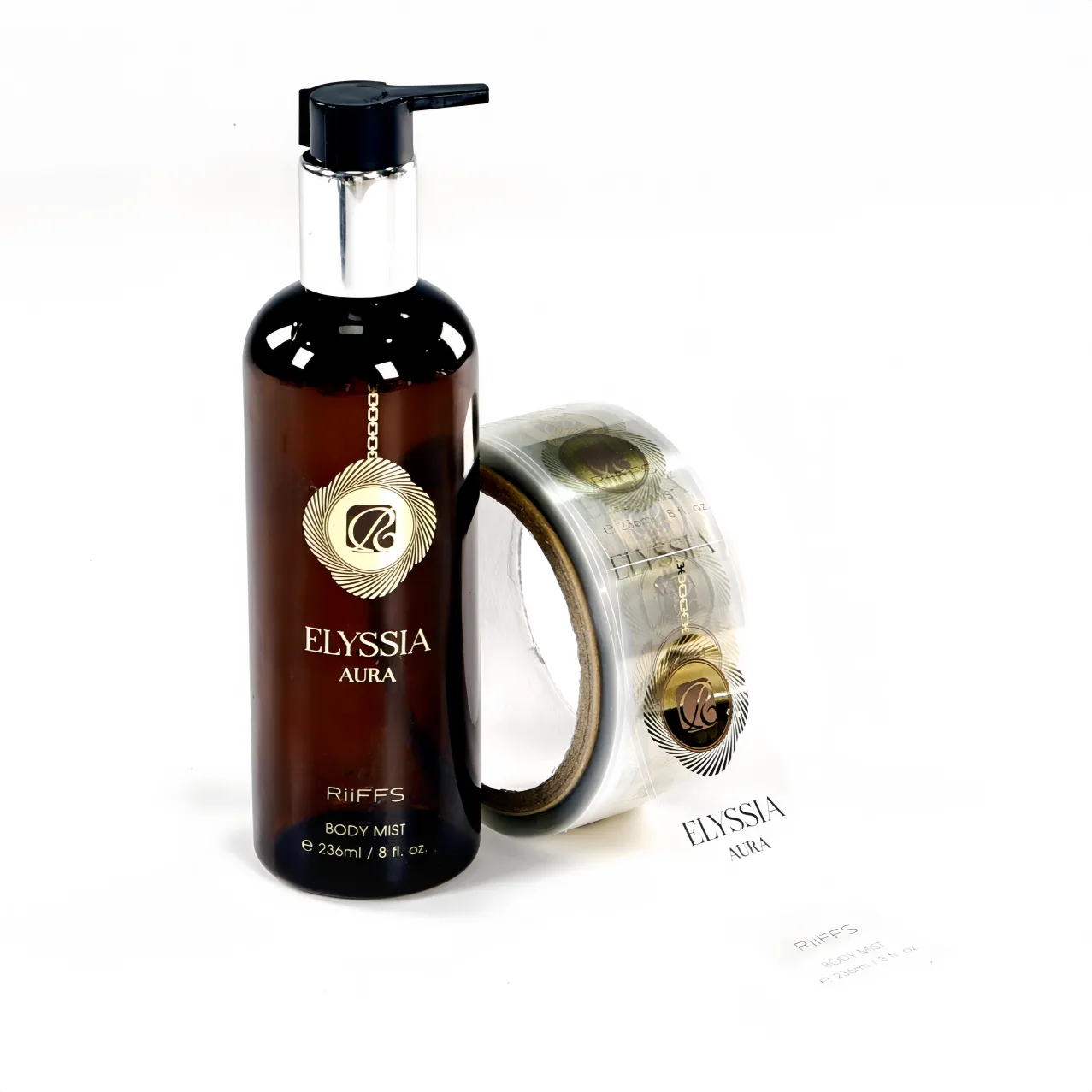
Clear labels (also called transparent labels or “no-label look” labels) are printed on transparent film — most commonly PET (polyethylene terephthalate), a crystal-clear, durable film that makes the artwork read as if printed directly onto the bottle, jar, or tube. (For reference: BOPP is usually chosen for bright silver or holographic metallic effects, while PP synthetic paper is the white, opaque, paper-like option — neither is the clear film.)
The effect is subtle but powerful: your customer sees the product itself — the golden oil, the amber liquid, the creamy texture — framed by crisp text and graphics rather than covered up by a white rectangle.
Why Brands Choose Clear Labels
Premium Perception
A clear label signals quality. It tells the buyer: “We’re not hiding anything.” High-end skincare, craft beverages, organic foods, and luxury home fragrances all leverage this psychology. When a brand invests in a clear label, the shelf presence immediately feels more refined.
Product Visibility
For products where the contents ARE the selling point — cold-pressed oils, infused waters, botanical extracts — a clear label turns the packaging into a window. Customers can verify freshness, color, and texture at a glance.
Design Versatility
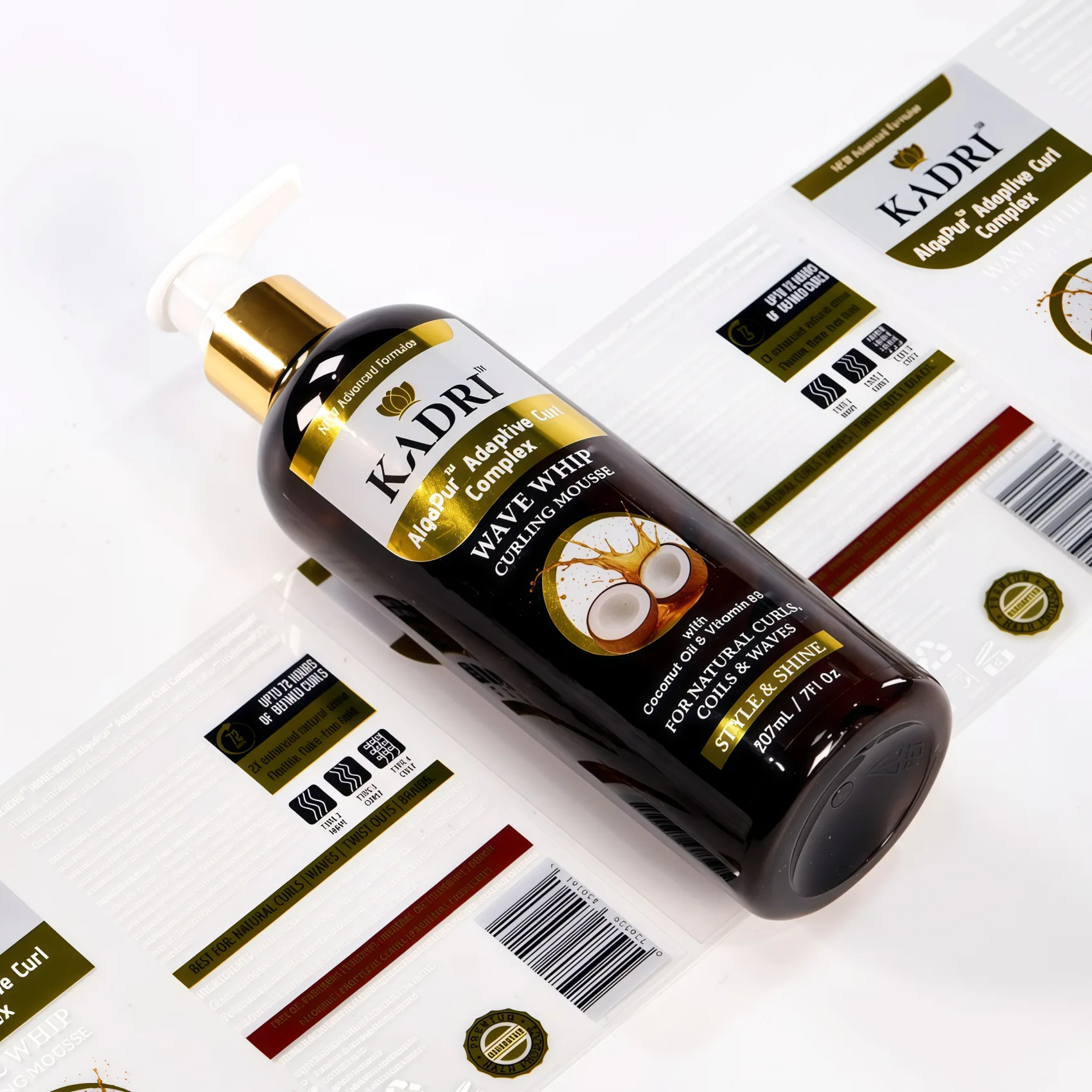
Transparent films work with nearly any print finish: matte, gloss, soft-touch, metallic ink, and even foil stamping. You can combine a clear base with spot UV varnish, embossing, or holographic accents for layered depth.
Sustainability Angle
For brands with certified-sustainability goals, clear labels can also be produced on FSC-certified eco-friendly material as a substitute for standard PET (at a higher cost) — pairing the no-label look with a verifiable chain-of-custody story. Clear film also helps cut total packaging when it replaces a separate printed sleeve or carton, so less material overall.
Design Rules for Clear Labels (What Works, What Doesn’t)
Designing for a transparent surface is different from designing for white paper. Here are the non-negotiable rules:
- Use solid backgrounds sparingly. Large blocks of white or light color will look like stickers floating on glass. Instead, embrace negative space — let the product show through.
- Ink opacity matters. Light colors (pastel yellow, pale pink) become nearly invisible on clear film. If you need light colors, request a white underlay (white ink printed behind the design area) to maintain visibility.
- Avoid thin serif fonts in small sizes. Fine lines can get lost against busy container textures. Sans-serif fonts with consistent stroke weight read better on transparent surfaces.
- Plan your barcode carefully. A white rectangular block behind the barcode is standard practice on clear labels. Specify this upfront so your printer reserves space for it.
- Test on the actual container. Always request a proof applied to your real bottle or jar. Colors shift differently on clear film versus paper, and the interaction between label graphics and container shape can reveal alignment issues.
Pro tip: If your product has a dark-colored container (black, deep blue, dark green), consider using a frosted or semi-opaque clear film instead of fully transparent. It diffuses the background enough that text remains readable while still showing the product silhouette.
Printing know-how: Most label adhesives are already transparent, so they won’t spoil the no-label look — and if you want zero residue on removal, specify an oil-based adhesive (油胶). For light-colored artwork on clear film, request a white ink underlay so the colors stay vivid instead of washing out against the product.
Clear Labels × Premium Finishes: The Winning Combo
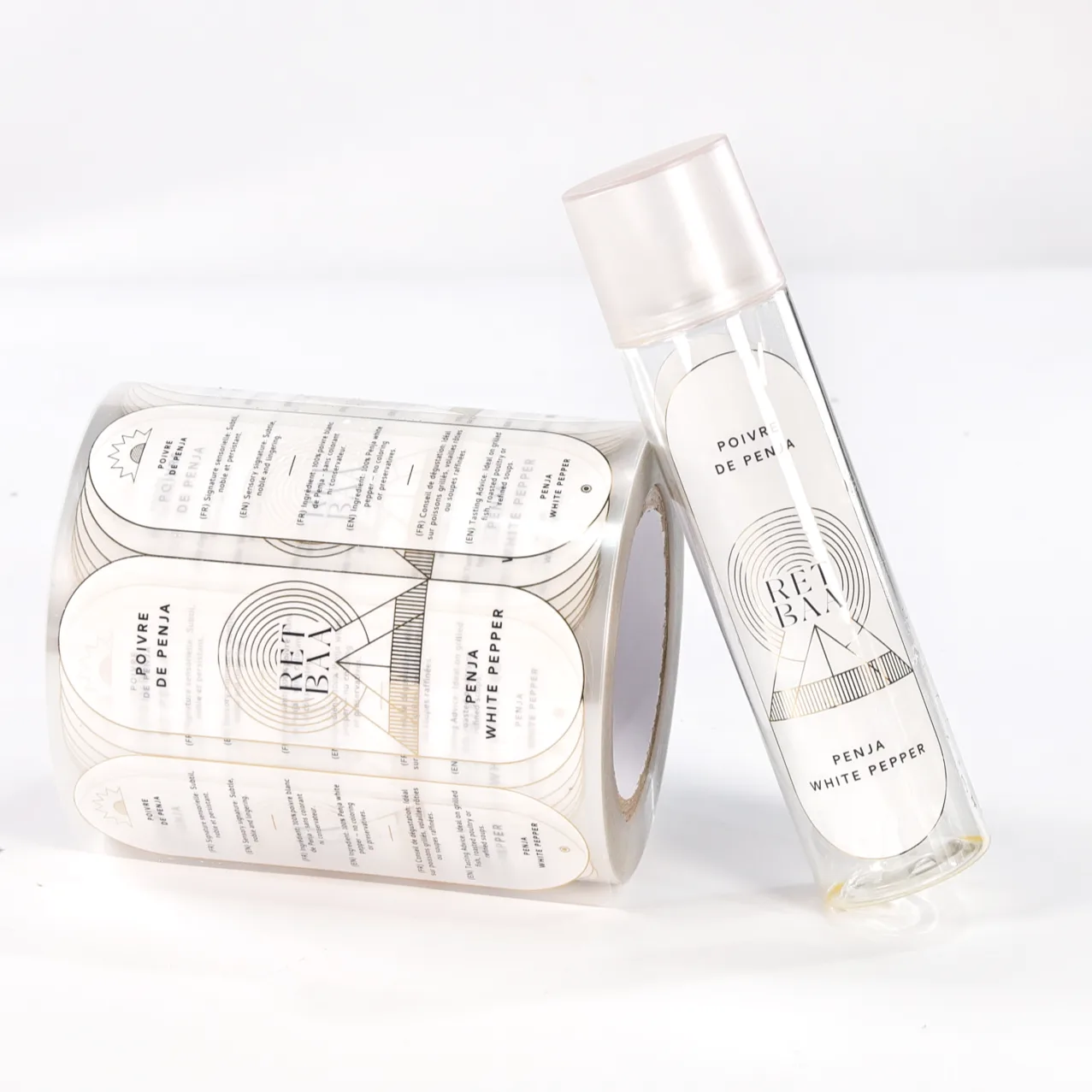
One of the most effective strategies we see at DJB Print is pairing a clear base material with a selective premium finish. Instead of covering the entire label in foil or holographic stock, you apply the finish only to specific elements:
- Foil-stamped logo only — the brand mark catches light in metallic gold or silver, while the rest of the label stays transparent
- Spot UV on key text — your product name gets a glossy raised varnish that draws the eye, surrounded by matte-clear areas. (Bonus: spot UV is just a transparent ink layer, so it also adds a scratch- and water-resistant coat — it does not crack, even on squeeze bottles.)
- Holographic accent strip — a narrow band of rainbow shimmer along the top or bottom edge adds movement without overwhelming the design
- Embossed texture — raised or recessed patterns that you feel with your fingertips, visible through the clear film
This “less is more” approach delivers more perceived value per square inch than covering the entire label surface. It’s also often more cost-effective since premium finishes are applied selectively rather than across the whole run.
The best clear label is the one you forget is there — until the finish catches the light, and the whole package suddenly feels premium.
Industries Where Clear Labels Dominate
Skincare & Cosmetics
The original adopter. Serums, toners, gels, and oils all benefit from showing color and consistency through the package.
Beverages
Infused waters, cold-brew coffee, and premium teas use clarity to signal purity and craftsmanship — and a few craft spirits do too, though many premium spirits still lean toward textured specialty paper.
Food & Supplements
Jars of honey, nut butters, protein powders, and vitamin bottles where ingredient visibility builds trust.
Home Fragrance
Candles, diffusers, and room sprays where the wax color or liquid tint is part of the aesthetic appeal.
Personal Care
Shampoos, body washes, and hand soaps where consumers want to see product quantity and texture.
Household Products
Eco-friendly cleaners, detergents, and reusables where transparency aligns with brand values.
What to Tell Your Printer Before You Start
To get a clear label project right on the first run, include these specifications in your brief:
- Substrate preference: PET (transparent film — the standard for clear/no-label-look labels, very clear and durable), PP synthetic paper (white, opaque, more durable than paper — for when you actually want a white label), or BOPP (typically specified for silver/holographic metallic effects — all our films hold the same high print definition)
- Adhesive type: Permanent (standard), removable (for reusable containers), or freezer-grade (for cold-chain). Most label adhesives are already transparent, so the glue won’t spoil the no-label look — and if you want zero residue on removal, specify an oil-based adhesive (油胶).
- White underlay requirement: Yes/no, and which elements need it (barcode? Light text areas?)
- Finish combination: Gloss lamination, matte soft-touch, foil stamping, spot UV, embossing — specify which elements get which treatment
- Container details: Material (glass/plastic/metal), shape (cylindrical/tapered/irregular), and surface texture (smooth/textured)
- Application environment: Indoor retail, outdoor exposure, refrigerated, or humid (affects adhesive and film selection)
Ready to Go Clear?
Send us your bottle, your design idea, or even a competitor’s label you like. We’ll recommend the right clear substrate, finish combo, and adhesive for your product — with a video proof at every step.
Pingback: One-Stop-Label + Verpackungsbeschaffung: Warum ein Partner fünf Fabriken schlägt
Pingback: Custom Cigar Bands: Folie, Prägung & Papier für Premium-Marken | DJB Print
Pingback: Etiquetas de la lámina holográfica: Arco Iris brillante, Materiales & Acabado Paring ← DJB Imprimir
Pingback: One-Stop Label + Packaging Sourcing: Why One Partner Beats Five Factories ← DJB
Pingback: Bandas de cigarrillo personalizadas: Foil, Embossing " Paper for Premium Brands ← DJB Print
Pingback: Etiquetas de botella de perfume: PET transparente de lujo, caliente foil & holografo < Holographic
Pingback: Embossed " Debosed Labels: How Touch Se convierte en una señal de marca
Pingback: Etiquettes Embossed & Debossed: Comment le toucher devient un signal de marque
Pingback: Etiquettes Holographic Foil: Rainbow Shine, Matériaux et Finition
Pingback: Holographische Folienetiketten: Rainbow Shine, Materials & Finish Pairing | DJB Print
Pingback: Parfümflaschenetiketten: Luxury Clear PET, Hot Foil & Holographic | DJB Print
Pingback: Étiquettes de bouteilles parfumées: PET transparent de luxe, Hot Foil & Holographic
Pingback: Bandes de cigarettes personnalisées: Foil, Embossage et papier pour les marques Premium