Most labels are designed to be seen. An embossed label is designed to be felt. That extra dimension — a logo you can run your thumb across, a pattern that catches light at an angle — is one of the quietest, most premium moves in packaging, and a signature finish on cigar bands, wine labels, and luxury spirits. Embossing is a paper-only finish: specialty paper, copperplate, coated card, and foil-laminated paper stock.
What Embossing & Debossing Actually Are
Both are pressure-based finishes — no ink, no foil, just a precision die pressing the material into a raised or recessed shape.
Emboss pushes the artwork up from the surface, so it stands proud and catches light and shadow. Deboss presses it down into the material, creating a subtle recessed imprint. Blind emboss (or “blind deboss”) is the same effect with no printed color at all — pure texture on a clean surface, the minimalist end of the spectrum.
Why Brands Choose Embossing
Touch = Memory
Neuroscience is clear: we remember what we touch. A customer who feels your logo is far more likely to recall your brand than one who only sees it.
A Silent Premium Cue
Embossing reads as “expensive” without saying a word. It’s the finishing move luxury houses use on cigar bands, wine bottles, and perfume boxes alike.
Ink-Free Minimalism
Blind emboss delivers a mark with zero ink coverage — perfect for the “less is more” aesthetic and for reducing print complexity.
Lightweight Security
A custom embossed pattern is hard to counterfeit cleanly, adding a subtle authentication layer to high-value products.
Embossing × Other Finishes: The Winning Combos
Embossing rarely works alone. The most striking results come from pairing it with another process:
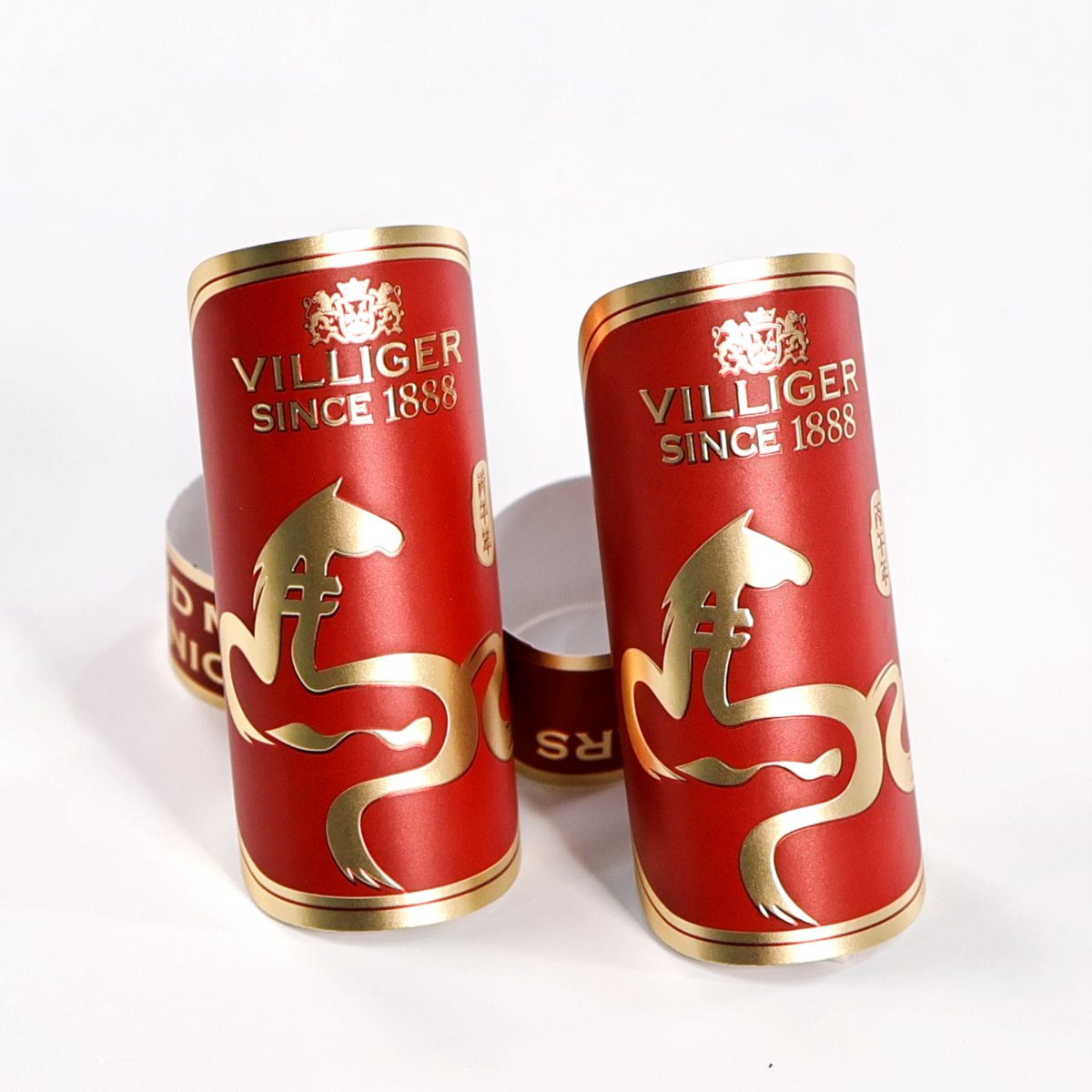
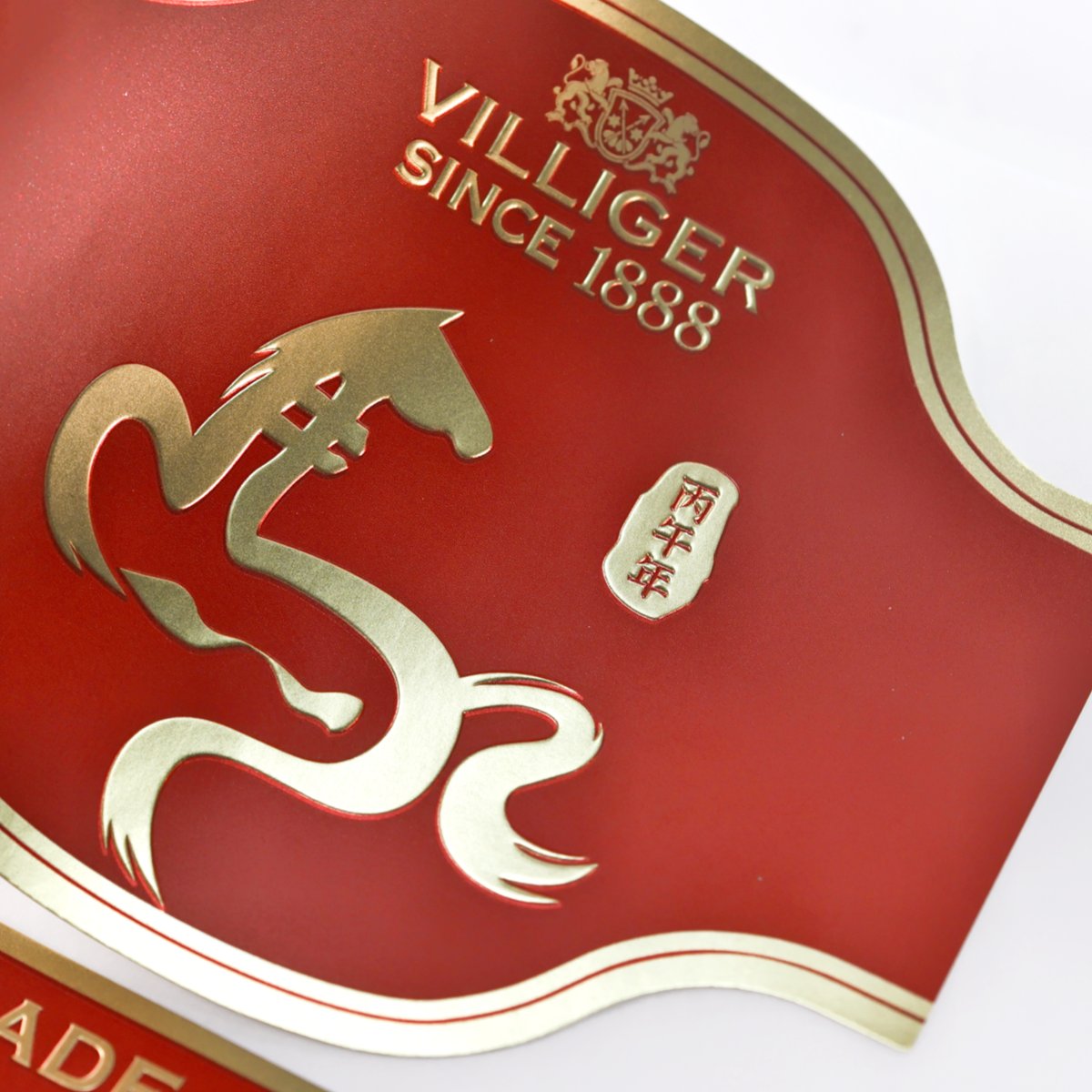
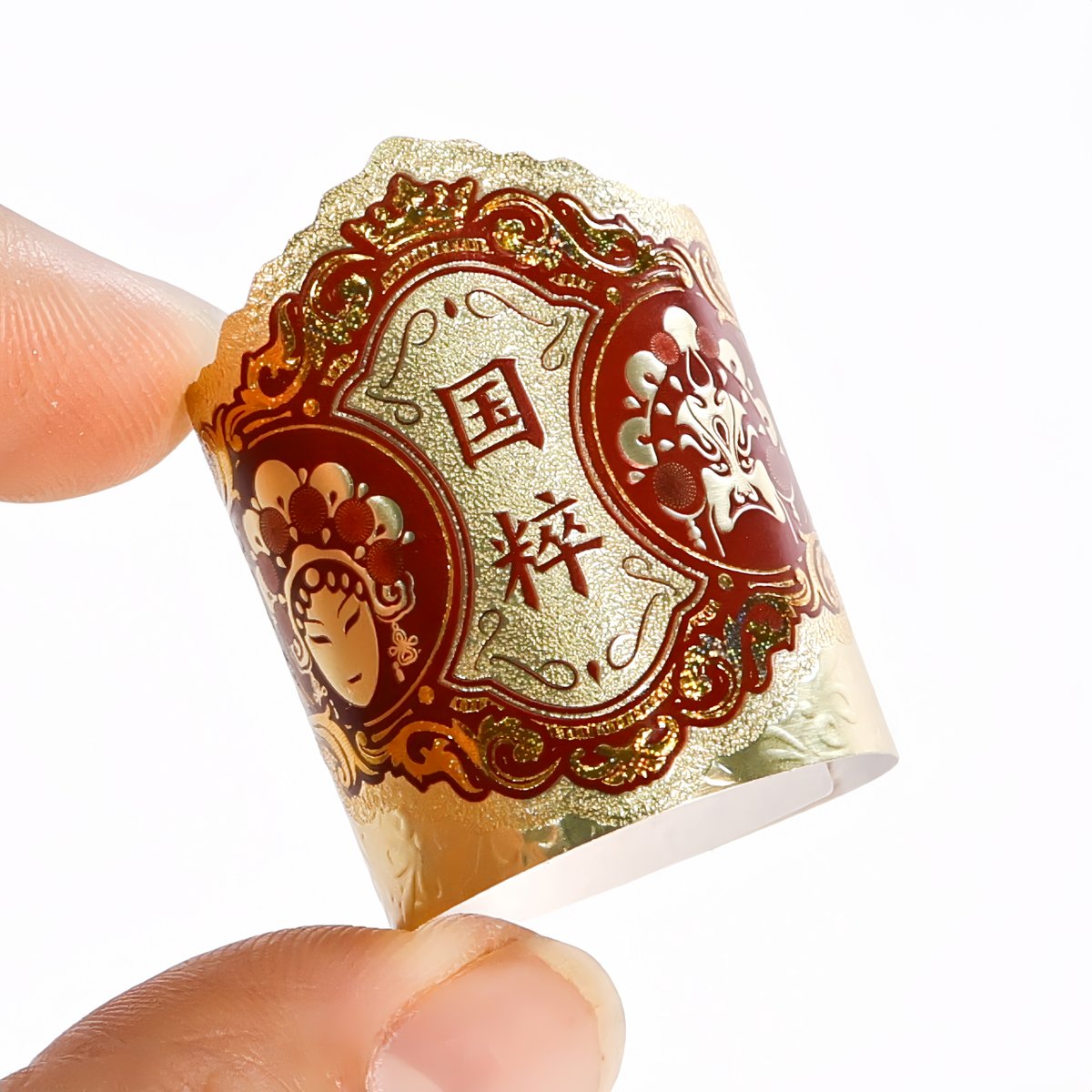
- Foil + Emboss — hot foil stamping pressed into a raised shape. The metallic sheen shifts as the label moves; this is the “wow” combination used on cigar bands and premium wine labels.
- Deboss + Spot UV — a recessed mark sealed with a clear glossy UV layer, giving depth plus a tactile-and-visual double hit. Spot UV is a transparent ink layer that adds scratch and water resistance without cracking.
- Blind Emboss on Paper — on a clean specialty paper or foil-laminated card, a raised pattern with no ink at all creates a pure-texture mark that you feel but barely see.
Design Rules to Get It Right
Embossing has physical limits. Brief these to your designer before art finalization:
- Keep lines bold. Fine hairlines under ~0.5 pt won’t register as a clean raised edge — they flatten out or break.
- Give elements breathing room. Packed, dense artwork blurs into a single bump. Space between shapes makes each one read.
- Match the substrate. Embossing needs body. Specialty paper and coated paper (copperplate / coated card) take embossing beautifully — embossing is a paper-based finish. Synthetic paper (PP) and film substrates do not emboss cleanly.
- Pick the die type. Brass dies last for long runs and crisp detail; magnesium is cheaper for shorter jobs; photopolymer suits fine, shallow work.
- Decide single vs. multi-level. A single-level emboss is one depth; multi-level (sculpted) adds realistic dimension but costs more in tooling.
Where Embossed Labels Shine: Cigar, Wine & Spirits
Embossing has long been the signature finish on the world’s most premium packaging. Walk into any cigar lounge, wine cellar, or spirits shop and you’ll see it everywhere — raised crests on cigar bands, debossed monograms on wine labels, sculpted foils on whisky bottles. These are categories where the label is the brand experience, and texture is the difference between “good” and “unforgettable.”
Cigar Labels
The most iconic embossed labels in the world sit on cigar bands. A raised gold-foil crest on a cigar wrap signals heritage, craftsmanship, and provenance before the cigar is even lit.
Wine & Spirits
Embossed crests, blind-debossed house monograms, and foil-and-emboss combinations turn a bottle into a gift. Premium baijiu, whisky, and cognac labels rely on tactile finishes to justify shelf price.
Perfume & Cosmetics
A raised logo on a cream jar or serum box signals craft and care. Blind-debossed perfume boxes read as heritage and quiet luxury.
Chocolate & Confectionery
Tactile marks on premium boxes justify the price point at the shelf.
Gifting & Stationery
Greeting cards, invitations, and seals — embossing is the language of occasion.
Membership & Loyalty
Embossed cards feel earned; the texture alone communicates status.
What to Tell Your Printer Up Front
- Effect: emboss, deboss, or blind — and single vs. multi-level depth.
- Combination: foil, spot UV, or clear-print pairing if any.
- Substrate: Paper only — specialty paper, copperplate, coated card, or foil-laminated paper. Embossing does not work on film substrates or synthetic paper.
- Artwork: vector logo with adequate stroke weight and spacing.
- Run size: determines die material and unit cost.
- Container: rigid or squeezable — affects adhesive and film choice.
Want an Embossed Sample in Your Hands?
Tell us your substrate and logo — we’ll press a real foil-and-emboss proof so you can feel the difference before you commit to a run.
Pingback: Perfume Bottle Labels: Luxury Clear PET, Hot Foil & Holographic | DJB Print
Pingback: One-Stop Label + Packaging Sourcing: Why One Partner Beats Five Factories | DJB