
A real case: a shampoo brand’s foil labels — originally supplied by a European vendor — started darkening, lifting and flaking after sitting in warehouses and on shelves. We didn’t change the material. We added one process step, killed the problem, and quietly took over the account.
Protective Varnish
Chemical Resistance
Personal Care Labels
1. The Client
The client is a haircare brand selling through local supermarkets and e-commerce in the African market. Foil stamping carries the main visual — the gold brand name and border are the most eye-catching element on the shelf. It had been supplied for years by a European vendor.
2. What Went Wrong
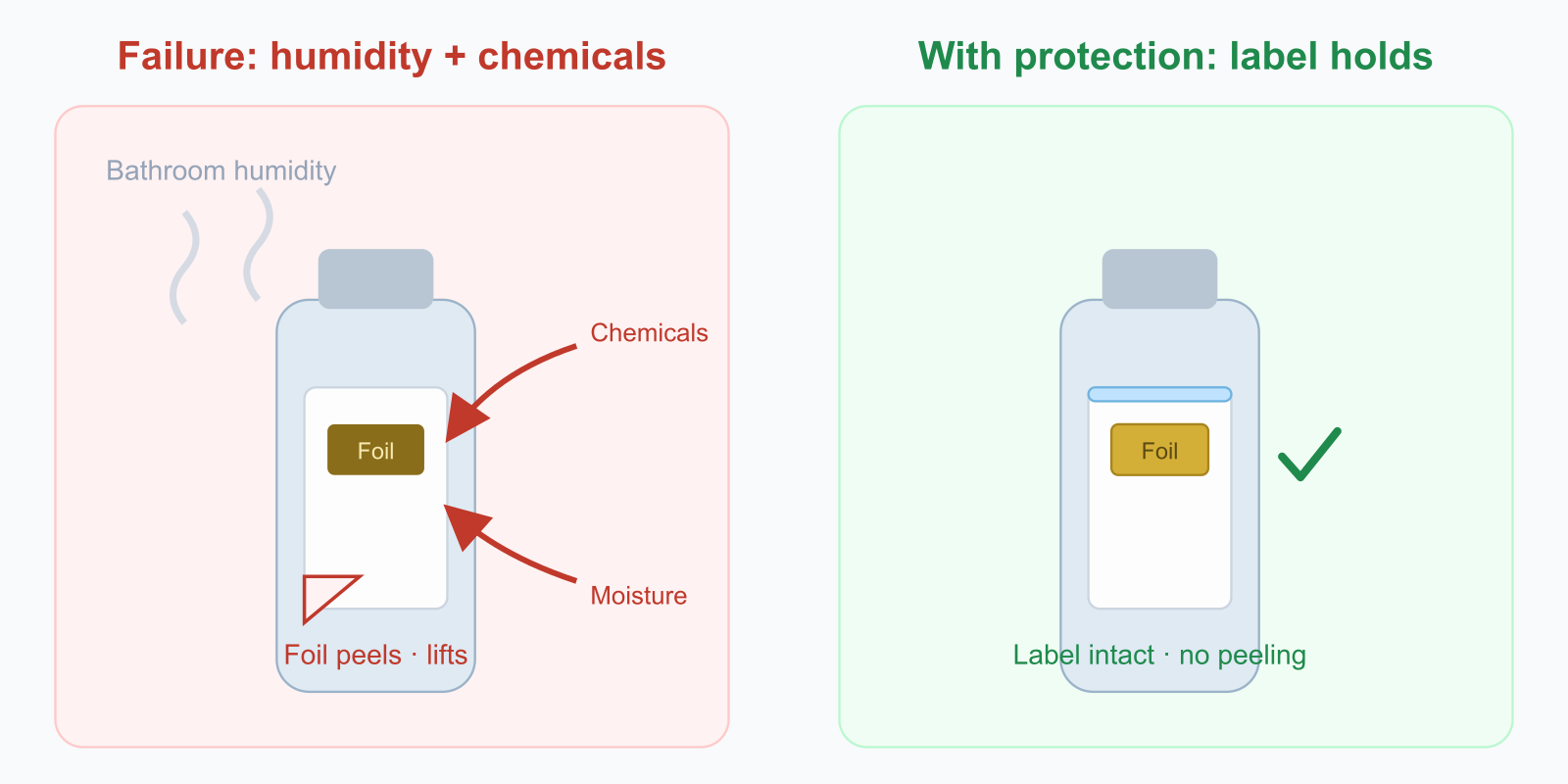
The brand reported that after the labels went on shelf and circulated through warehouses and stores for a while, the foil began to darken in patches, lift, and in severe cases peel off entirely, exposing the layer underneath. The closer to the bottle and the longer it touched the formula, the worse it got. For a haircare product the label is the face — once the gold goes, the whole batch loses its premium feel.
3. Root Cause: the Foil Was Exposed
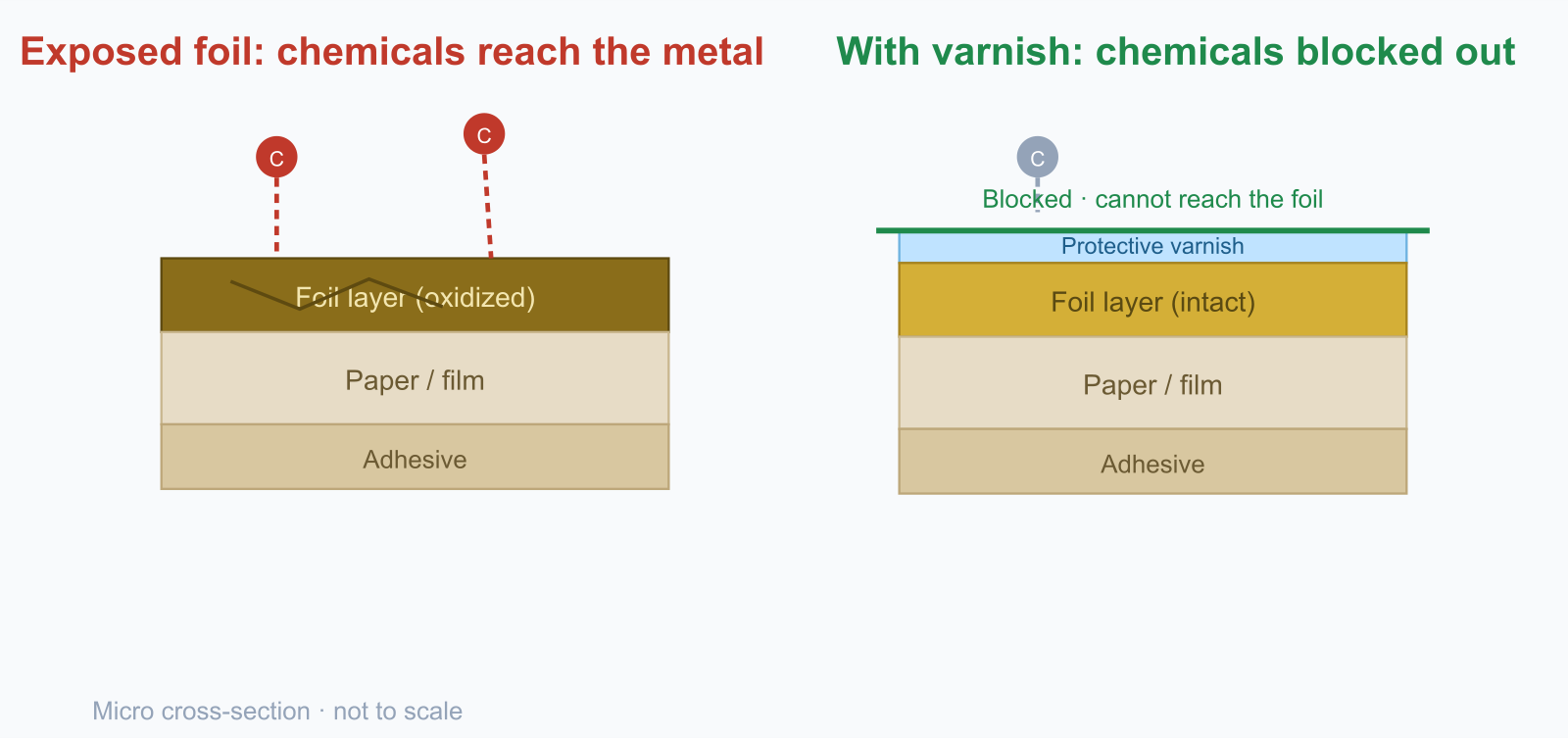
Foil stamping is an extremely thin transferred metal layer, applied either by heat (hot stamping) or by primer plus UV (cold foil). It looks premium, but when left exposed it does not resist chemical attack well — shampoo and conditioner contain surfactants, fragrance and preservative systems that, over long contact, work their way into the label and attack the metal layer, causing oxidation, discoloration and peeling.
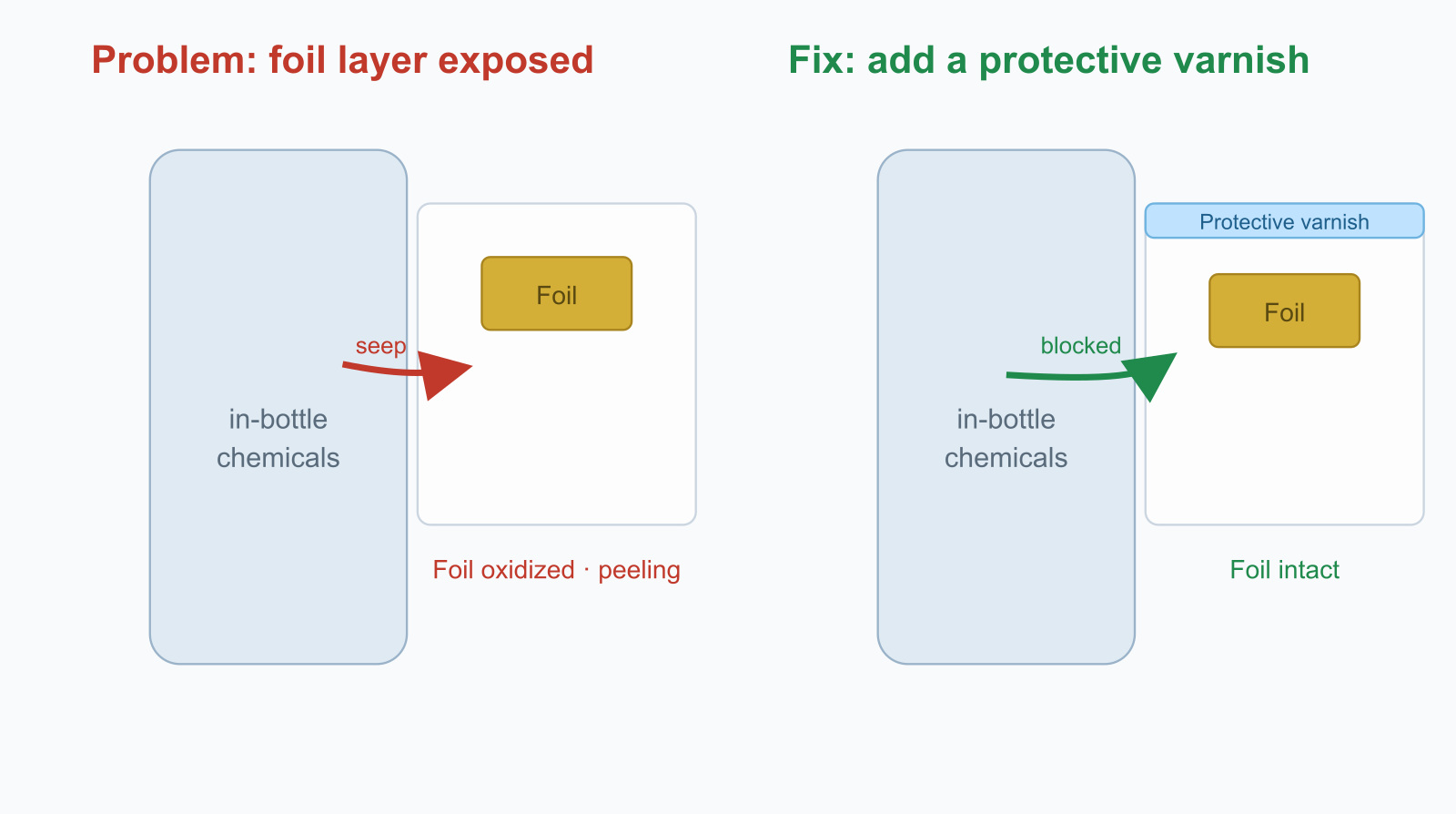
The original vendor delivered the foil as-is: the gold layer was effectively naked in front of the chemicals. The foil process wasn’t wrong — it was missing a protective barrier.
A bit of process background: foil stamping comes in four methods — hot stamping, cold foil, screen foil (wet foil) and digital foil. This case ran a hot/cold foil system with a finest line around 0.2 mm; whichever method you use, the metal layer fears long-term chemical contact — only the adhesion strength differs.
4. The Fix: One Process Change, One Varnish Layer
We didn’t tear it up and start again. We did two things:
- Kept the original foil effect — we left the gold visual the client cares about most untouched;
- Ran a protective varnish layer over the foil, physically separating the metal from the formula inside the bottle. Varnish is waterproof and oil-resistant, which blocks exactly the erosion path the formula takes.
Varnish is a mature surface treatment: glossy, smooth, and once fully cured it forms a protective layer. It doesn’t change the foil colour — it just shields an invisible armour on top. The cost is small and the extra step is simple.
5. The Result: a Stable Replacement
After the change — same batch of formula, same warehouse and shelf conditions — the foil no longer oxidised or peeled, and the shelf performance recovered. Total cost came in below the original European vendor, so the client moved this label line to us on a stable basis.
A note for fellow haircare brands: whenever a label will sit long-term against a bottle holding a chemical formula (shampoo, body wash, skincare), pair foil or metallic effects with a protective varnish. Skip the step and nothing shows up short-term — but three to five months later, when the gold fails, the rework bill far outweighs that one layer of varnish.
Specs at a Glance
| Item | This Case |
|---|---|
| Application | Haircare bottle labels (long-term contact with the formula) |
| Main visual process | Foil stamping (hot / cold system, finest line ~0.2 mm) |
| Original problem | Foil oxidised, lifted and peeled under attack from the formula |
| Key change | Protective varnish added over the foil to isolate chemical erosion |
| Protection mechanism | Varnish is waterproof and oil-resistant, blocking the formula’s contact path |
| Result | Foil stable, no peeling; total cost below the original European vendor |
Common Questions
Do all foil labels need a protective varnish?
No. If the label sits on dry outer packaging that never touches the formula (a carton or shipping box, for example), it usually isn’t needed. But for any label stuck to a bottle holding a chemical formula, we recommend it as a safeguard.
Will the varnish affect the foil colour or texture?
A qualified varnish layer is transparent, smooth and fully cured — it won’t change the gold colour or the metallic feel, it just adds a layer of protection. We confirm the gloss match at proofing.
Do other processes besides foil need similar protection?
Screen and digital inks are relatively tougher, but under a strong chemical environment, key artwork areas can be reinforced with varnish too. It comes down to the formula and where the label is applied.
Related Reading
- Custom Shampoo & Personal Care Labels — the product line behind this case.
- Hot Foil vs Cold Foil Labels — which foil system suits a chemical-exposed bottle.
- Hot Foil Stamping Labels — the core foil technique, step by step.
- Clear PET Labels for Personal Care — the no-label look alternative for bathroom bottles.
- Perfume Bottle Labels with a Luxury Feel — premium finishing for cosmetics.