Double-Sided Printed Labels: It’s the Opaque Middle Layer That Keeps Both Sides from Clashing
With double-sided labels, the real risk isn’t that they can’t be printed — it’s that the text on each side shows through and clashes. The date on the front bleeds through to the back, the phone number on the back bleeds through to the front, and held up to the light, nothing is legible. The fix sounds simple: add an opaque interlayer between the two material layers, turning two into three. But where and how you add that layer decides both the cost and the result.
1. Two ways to do double-sided printing — know them apart first
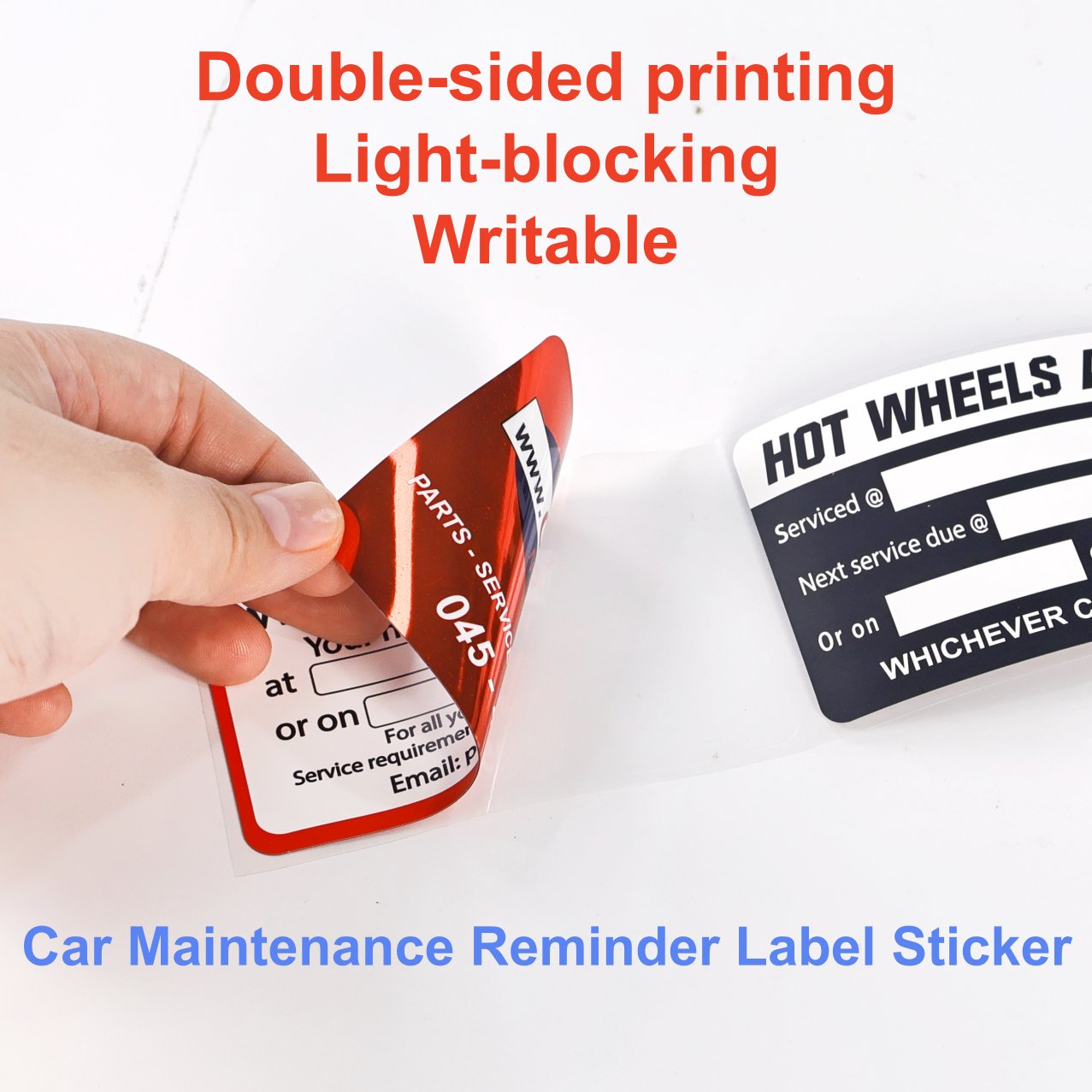
In the industry, “double-sided printed labels” actually refers to two completely different structures. Pick the wrong one and everything downstream is wasted:
- Transparent material + reverse printing on the adhesive side: used on transparent application surfaces (glass windows, clear bottles). The content is printed on the adhesive side (reverse printing), and once applied it’s read from the other side through the transparent material — the text can’t be scratched off, and there’s no edge from a second label. This is a single-layer solution, made possible by transparency.
- Three-layer sandwich + separate printing front and back: used when both sides need to be solid with no see-through. Content is printed on the front, content is printed on the back, and an opaque interlayer in the middle keeps the two sides apart. This is the one we’re talking about today.
How to choose: if the application surface is transparent and you only want the other side to be able to read the text → reverse print on the adhesive side; if both sides need a solid white base, both need content printed full-bleed, and neither is allowed to show through to the other → three-layer sandwich. The auto-service industry’s maintenance reminder sticker is a typical example of the latter: the front carries the service date, the back carries the shop’s ad, applied to the inside of the windshield, and people outside the car read the back ad through the glass.
2. Why the opaque interlayer is necessary: a real client complaint
We had a client who first printed a batch of two-layer-structure double-sided labels (one material layer on front, one on back, nothing in between). After applying them to car windows, the complaints came in: once the sun hit them, the back content showed through to the front, the colors and text of both sides overlapped and bled, and the handwritten service date on the front smeared together with the shop’s phone number on the back.
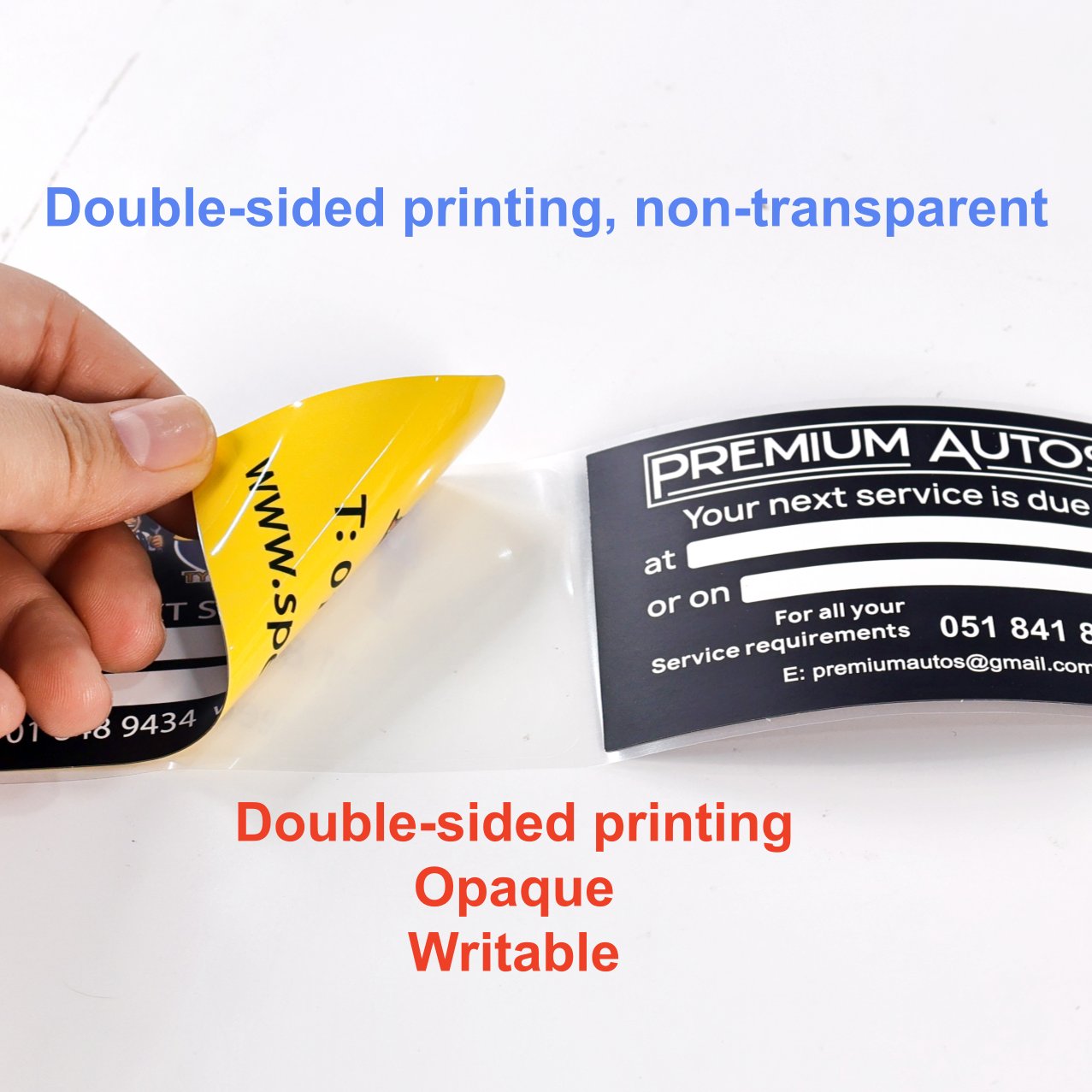
The fix: add an opaque isolation layer between the two material layers, turning two into three. The on-site verification is direct — shine a flashlight right against the label; it only passes when it’s completely opaque. Adding this layer bumps the cost up a bit (one more material layer and one more lamination pass), but after weighing “keep the color bleed” against “spend a little more,” the client accepted it.
Experience note: as long as your double-sided label will be applied to a light-transmitting position (car windows, glass doors, light boxes, transparent equipment panels), default to the three-layer sandwich. The cost saved by the two-layer structure doesn’t offset a single complaint.
3. “Writable” isn’t just leaving a blank space
The front of a maintenance reminder sticker usually leaves a few handwriting columns (date, mileage, work-order number) for the technician to fill in on-site with a ballpoint or marker. “Writable” sounds like no processing is needed, but there’s actually technique to it:
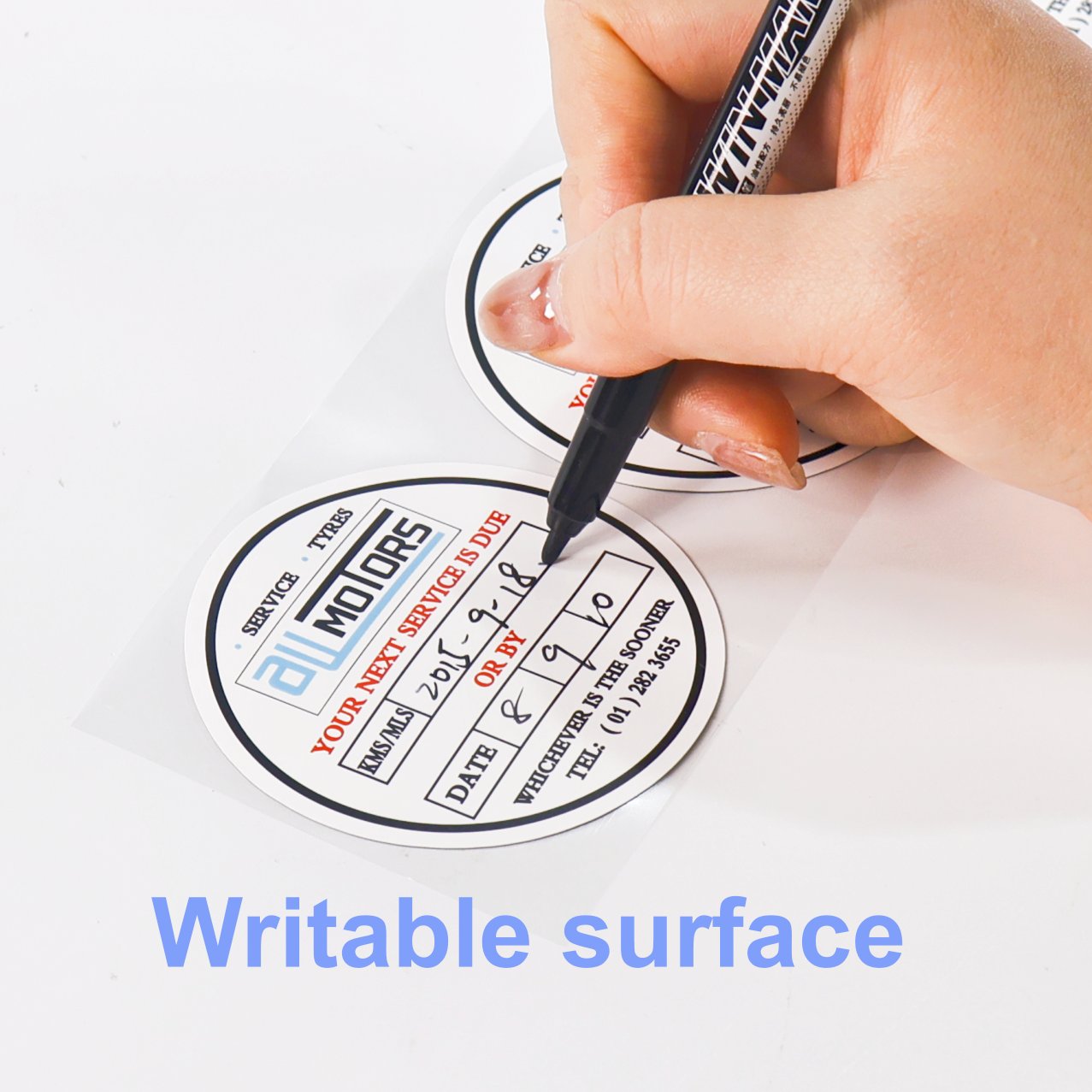
- Glossy film can’t be written on: the surface is too slippery, the pen tip slips, and the writing rubs off with a single wipe — the handwriting area must be matte-treated (matte film or a non-gloss writable coating).
- Won’t smudge after sun exposure: temperatures inside the windshield can reach 70–80°C in summer, and ordinary ink will blur. Only with a writable surface plus weather-resistant material together does the writing hold.
- Wash-proof handwriting is a different approach: if you need labels that are handwritten and then must resist water washing (e.g. turnover-bin labels), the approach is to print the content first, then after handwriting is done, apply a transparent protective film over the writing to seal it — waterproof and smudge-proof. Choose between the two “writable” approaches by scenario; don’t mix them.
4. Typical applications of opaque-interlayer labels
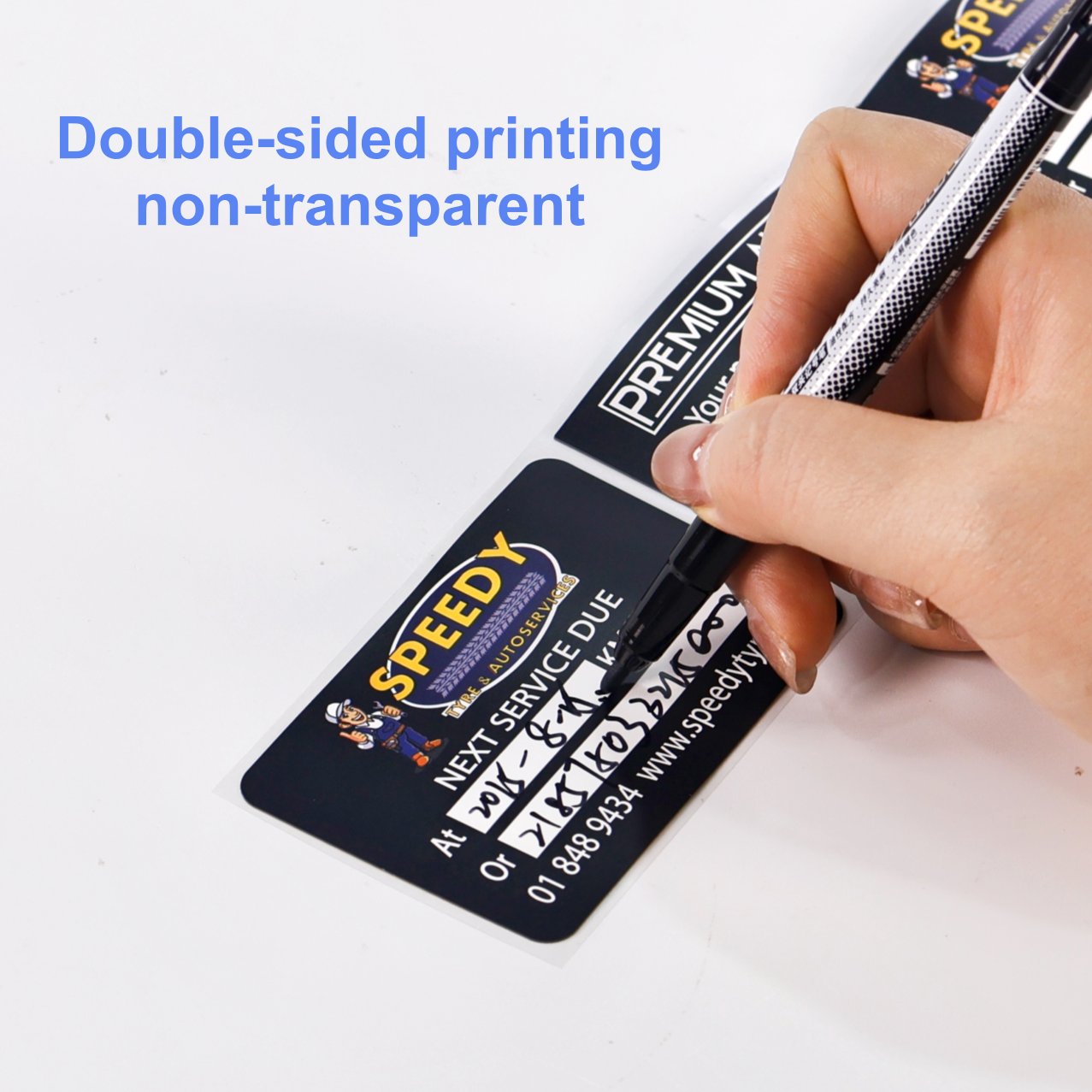
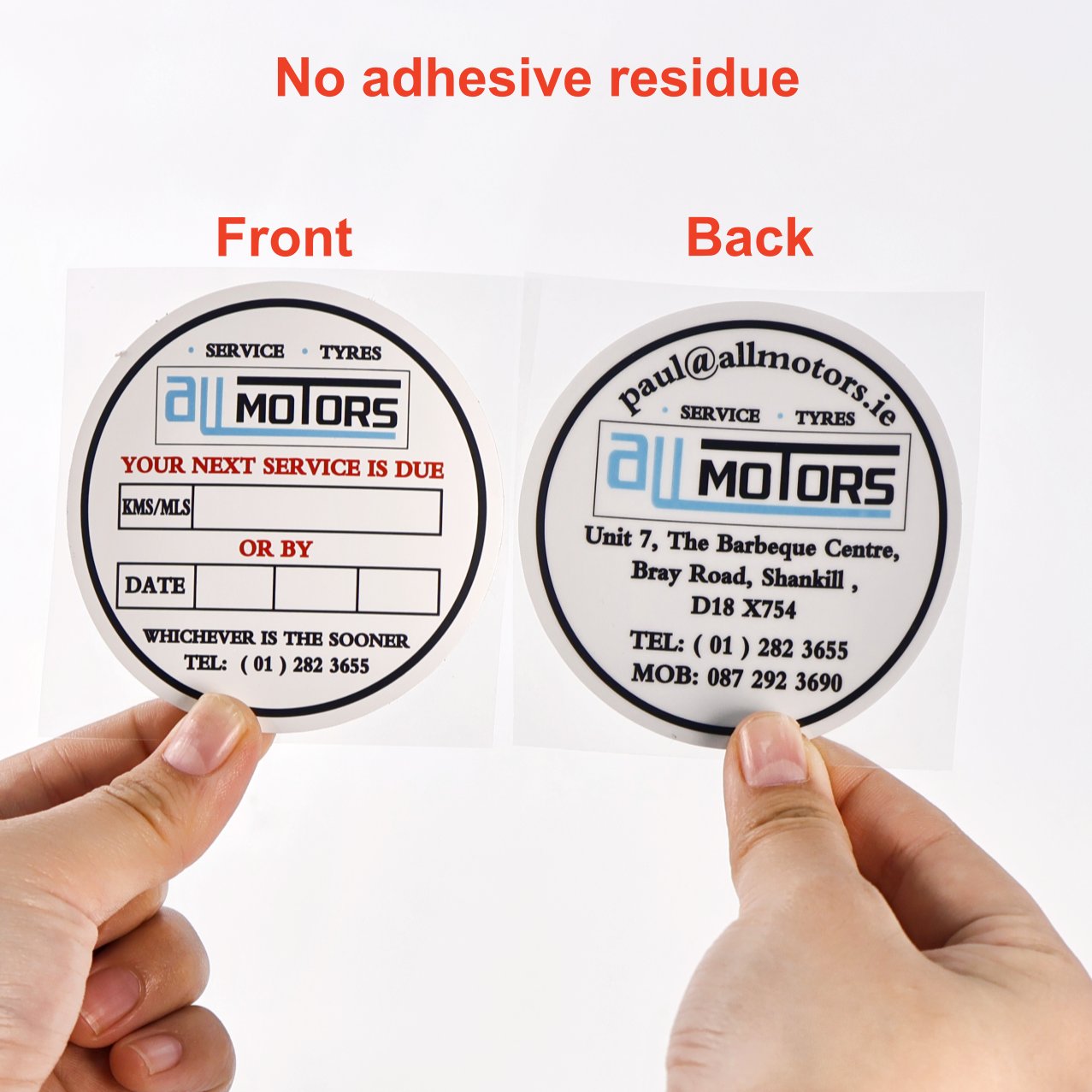
- Auto maintenance reminder stickers: front handwriting column for “next service date / mileage,” shop info on the back. Applied to the inside of the windshield, read from each side.
- Car-window parking card / temporary parking sign: front has the move-car phone number, back has a QR code or notes.
- Trade-show double-sided hang tags / string tags: each side printed with content, hung on a string, both sides visible when flipped.
- Operation label on transparent equipment panels: each side annotates instructions in a different language.
5. Spec reference
| Item | Detail |
|---|---|
| Structure | Three-layer sandwich: printed face stock + opaque interlayer + printed back layer |
| Face stock | Writable film (BOPP/PET) or coated paper, chosen by weather-resistance requirement |
| Printing | Full-color both front and back; reverse-print-on-adhesive only for transparent materials |
| Writable surface | Matte lamination / writable coating (ballpoint, marker) |
| Adhesive | Removable low-residue adhesive (clean removal from glass); permanent adhesive as needed |
| Die-cut | Round / rounded rectangle / custom shape, made to drawing |
| MOQ | From 1,000 pcs (small batch negotiable, slightly higher unit price) |
| Lead time | 7–12 business days (incl. sample confirmation) |
6. Frequently asked questions
Is the price gap big between two-layer and three-layer sandwich?
The three-layer adds one more lamination pass and one more material layer, so cost goes up a bit, more noticeably at smaller volumes. But whether to save that layer comes down to one criterion: whether the application position transmits light. Putting two-layer labels on a light-transmitting position is booking a complaint in advance.
For transparent labels with text printed on the adhesive side, will the glue “eat” the text?
Reverse printing is on the inner side of the adhesive, and once applied the text is protected by the transparent material — it’s actually more scratch-resistant than surface printing. What needs attention is the choice of transparent material itself and ink adhesion; confirm during sampling.
Will the opaque interlayer make the label much thicker?
The interlayer is very thin, so the overall thickness increase is limited. It still conforms on curved surfaces (windshields have curvature) without edge lifting.
What pen is best for handwriting?
Ballpoint and oil-based markers are the most reliable. Water-based pens also write on matte surfaces, but may blur if they meet water — if the use scenario involves water, we recommend the “write first, laminate after” approach.