
Hot Foil vs Cold Foil vs Metallic Ink: A Label Printer’s Guide
There are three ways to put a metallic look on a label: hot foil stamping, cold foil transfer, and metallic ink printed on a silver BOPP base. Each gives a different shine, tactile feel and cost profile. Here’s how we tell them apart on the production floor and which one we recommend for your artwork.
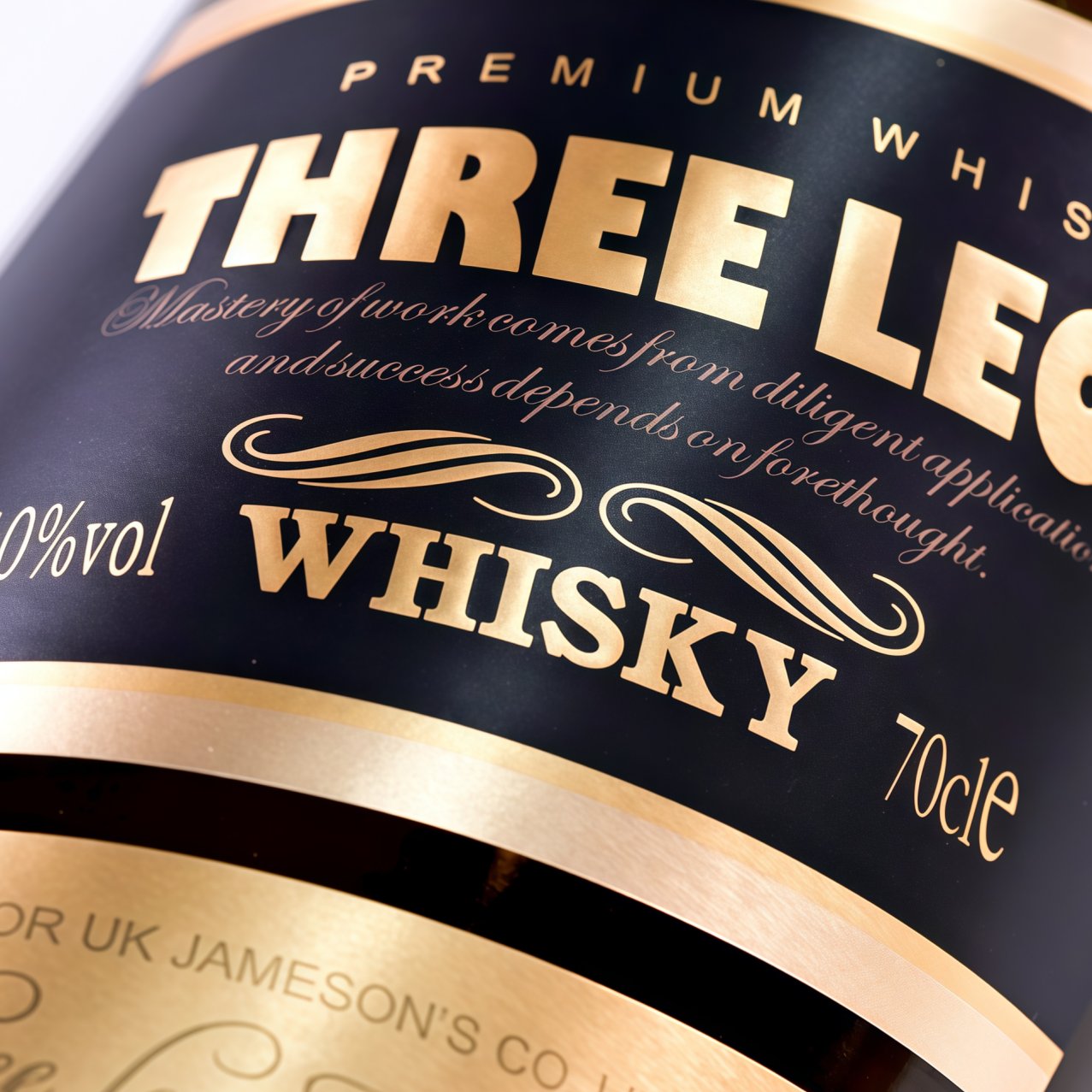
1. Hot Foil Stamping
Hot foil uses a heated engraved plate — brass or copper — to press a foil carrier onto the substrate under high temperature and pressure. The finest line it reliably holds is about 0.2 mm. It is the brightest and most tactile of the three options, which is why it dominates premium wine and spirits labels. Two defects we watch for are powdering (gold flecks breaking off fine edges) and blocking / filling-in (foil smearing into detail), usually caused by temperature, pressure or foil-to-material mismatch.
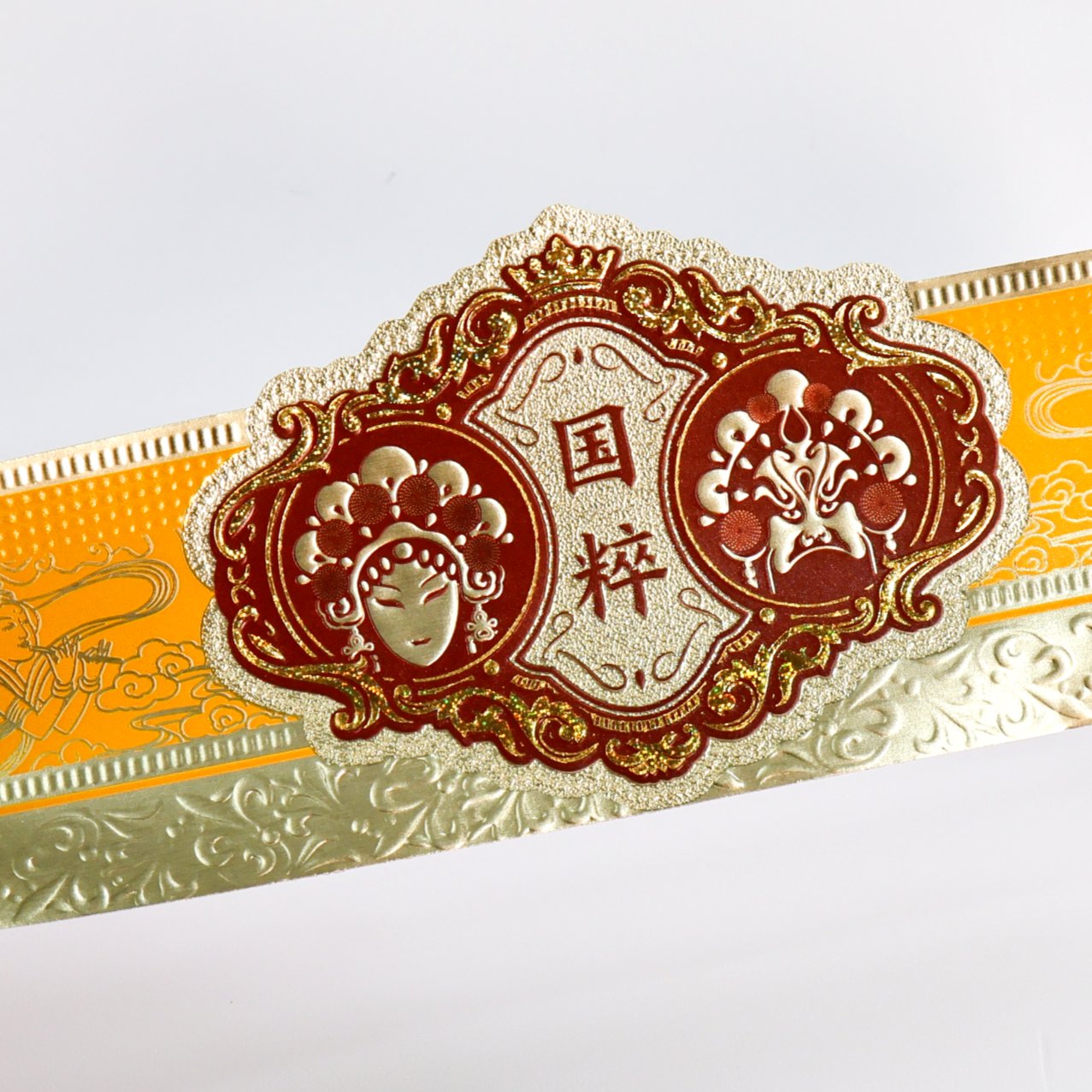
2. Cold Foil Transfer
Cold foil uses a resin printing plate to lay down a foil adhesive, UV semi-cures it, then transfers the foil under print pressure. No heat is involved, so it runs inline with the press and is faster for long runs. The metallic layer sits slightly above the surface, giving a subtle raised feel, but it is not as bright as hot foil and fine lines can block more easily. The main defect is blocking / filling-in on dense patterns, where adhesive cure and pressure have to be tightly controlled.
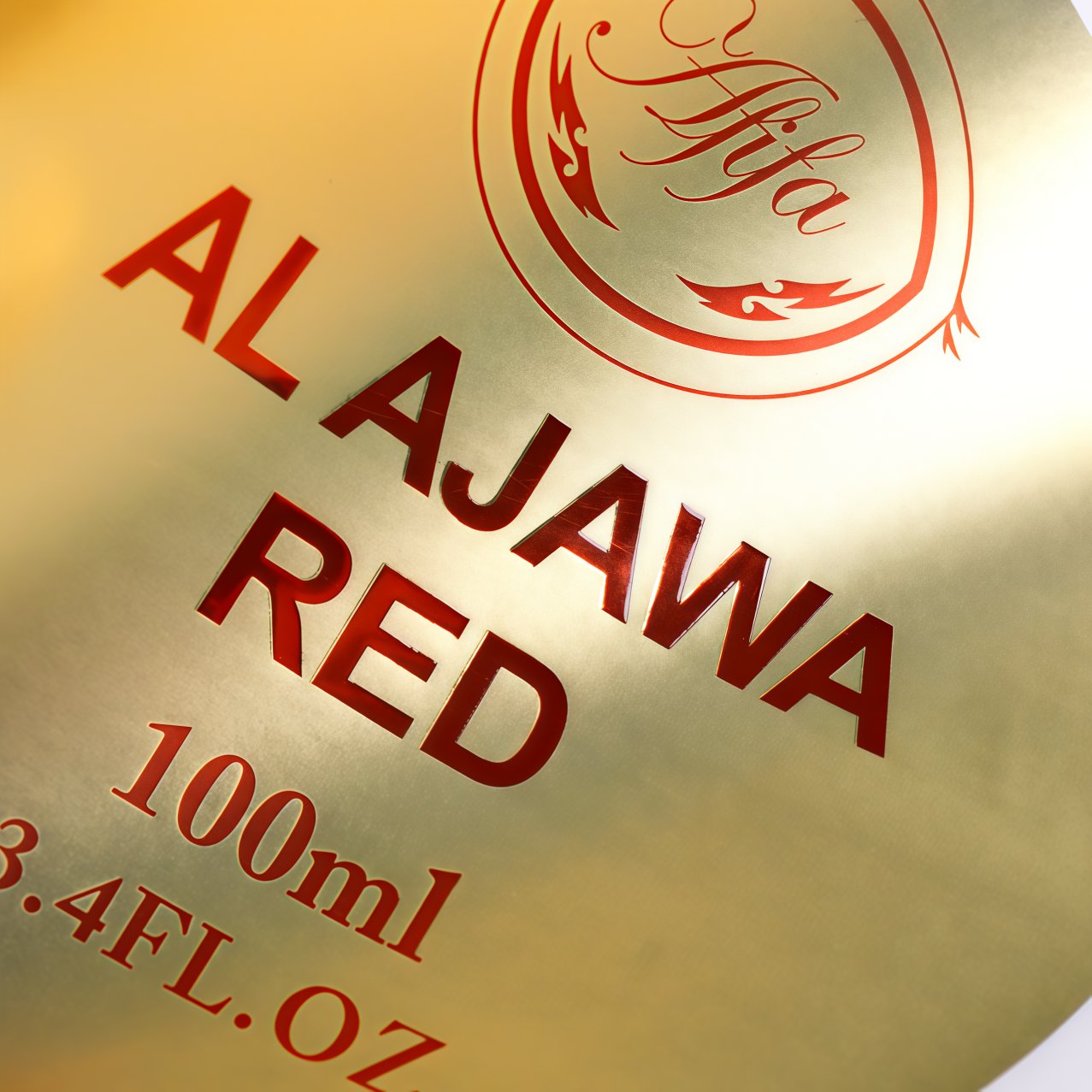
3. Metallic Ink on Silver BOPP
The third route is to print colored inks on top of a silver BOPP or metallized PET film. The silver base reflects light through the ink, giving a colored metallic look — green-gold, red-gold, copper, etc. It is more economical than foil and avoids the setup of a foil die, but the result is softer and less mirror-like than either hot or cold foil. It also has no physical relief, so the surface stays flat.
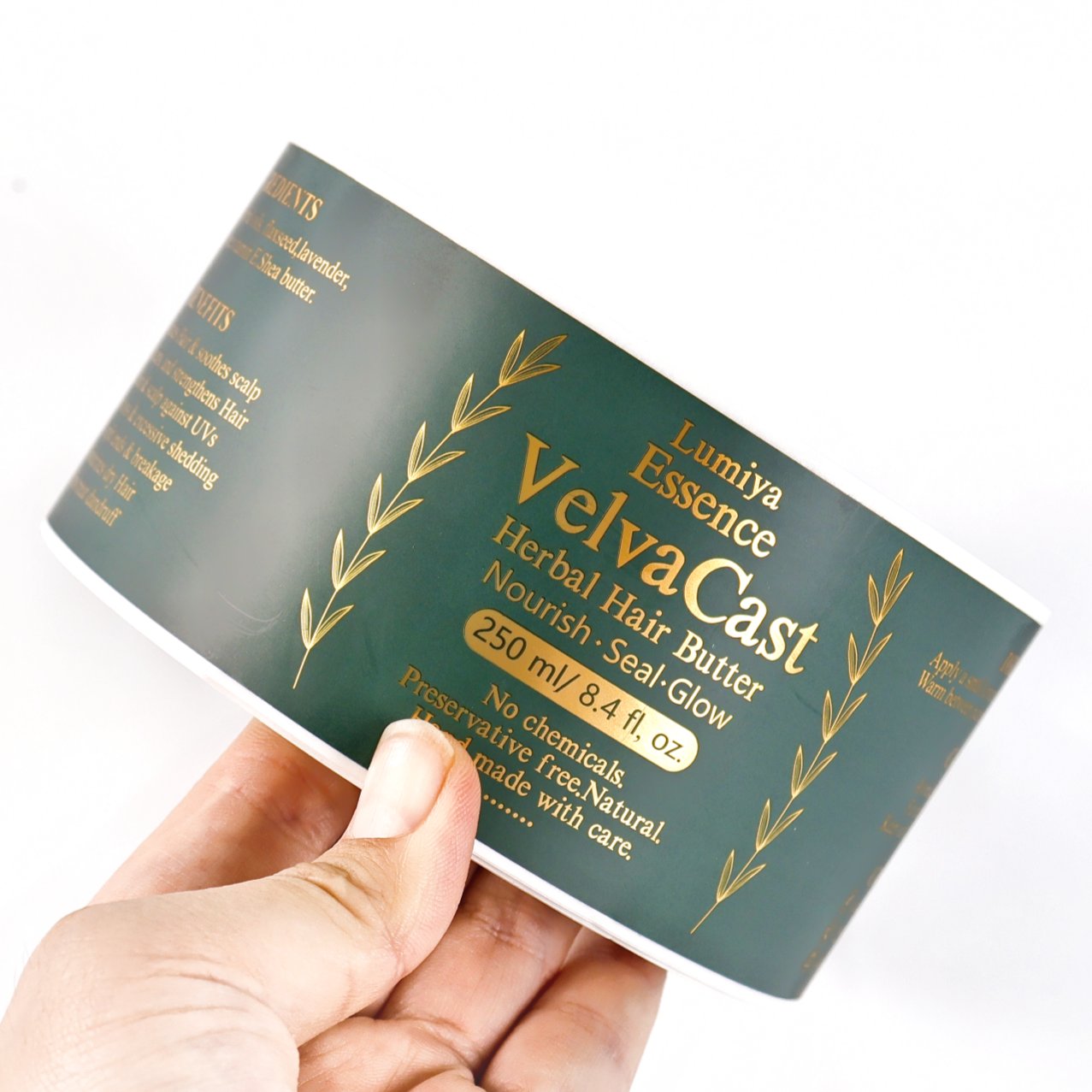
Side-by-Side Comparison
| Factor | Hot Foil | Cold Foil | Metallic Ink on Silver Film |
|---|---|---|---|
| Process | Heated engraved plate + pressure | Resin plate + UV adhesive + pressure | Print ink on silver BOPP/PET base |
| Brightness | Highest — mirror-like | High, slightly softer than hot | Moderate — tinted metallic |
| Surface feel | Slightly raised, distinct foil layer | Slightly raised | Flat, smooth |
| Min line width | ≈0.2 mm | Limited by print/foil transfer | Limited by print resolution |
| Best for | Fine logos, luxury labels, small text | Long runs, large solid metallic areas | Budget-friendly colored metallic |
| Main defect | Powdering, blocking | Blocking on dense patterns | Color drift, less mirror effect |
Which One to Pick
- Fine logo, small text, mirror shine and tactile foil? → Hot foil.
- Large solid metallic areas, long run, tight deadline? → Cold foil.
- Colored metallic look on a budget, no relief needed? → Metallic ink on silver BOPP.
- Not sure? → Send us the artwork; we proof the options and show you the difference before bulk.
Before we commit, we check the artwork density, the smallest line or text, the run length, and the substrate. Film and paper behave differently under heat, pressure and adhesive, so the choice is always a combination of look, material and volume.
Common Questions
Is cold foil cheaper than hot foil?
For long, solid runs it usually is — no separate foil press, faster throughput. But a short run that still needs a resin plate does not always save money. Volume and artwork determine the answer.
How do we prevent hot-foil powdering?
Match temperature, pressure and foil grade to the material. We lock that window at the proofing stage before bulk.
Can the three be combined?
Yes. A common premium combination is hot foil for the fine logo, cold foil for a large metallic background, and metallic ink for subtle colored accents. We register them in separate passes.
Can metallic labels be embossed?
Only if the base material is paper-based. Film labels (BOPP, PET) rebound after embossing, so the relief will not hold. For film, use foil or metallic ink for the look; for a raised feel, switch to paper.